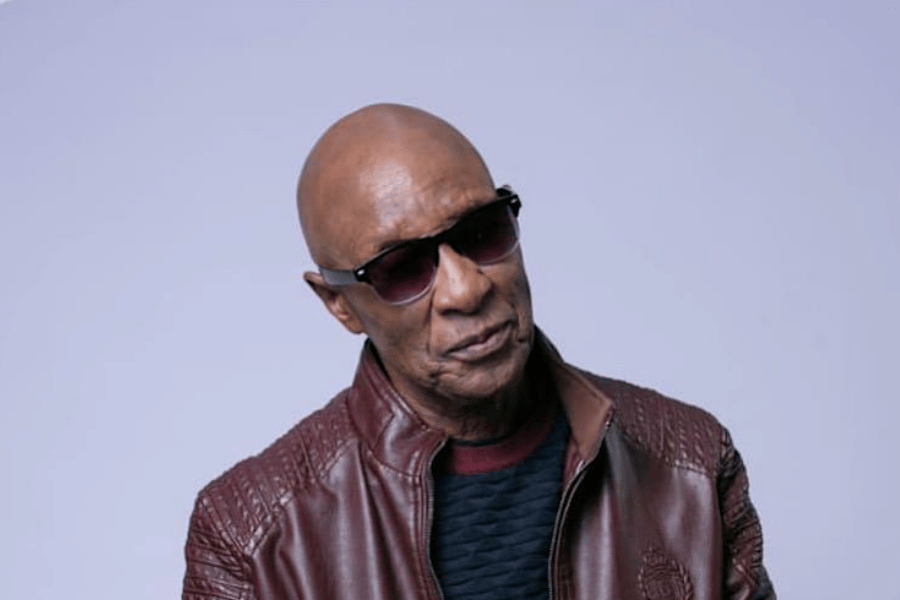
South African music legend Babsy Mlangeni has died at the age of 83 after a brief illness.
Mlangeni, whose career spanned more than five decades, was known for his distinctive voice and enduring songs including Sala Emma, Bua Nnete and Botsotso.
His music became woven into the lives of generations of South Africans, establishing him as one of the country’s most recognisable veteran performers.
Born Bernard Mlangeni in Orlando East, Soweto, in 1943, he lost his eyesight when he was just three years old.
His blindness, however, did not prevent him from pursuing his passion for music or building a career that would last almost six decades.
Mlangeni attended the Athlone School for the Blind in Cape Town, where he developed his guitar skills before entering the professional music industry.
He gained widespread recognition in the early 1970s with Bua Nnete, which was followed by several popular recordings.
Among them was Sala Emma, a song dedicated to his wife, Emma, which went on to become one of the defining songs of his career.
Mlangeni’s influence was not limited to his recordings and performances.
He established himself as a trailblazer for blind musicians at a time when artists with disabilities encountered major obstacles in the entertainment industry.
His career became an inspiration to generations of performers and demonstrated that blindness did not have to stand in the way of artistic achievement.
Mlangeni also played a role in developing younger musicians, including the late Steve Kekana, another visually impaired artist who would later achieve national fame.
Despite advancing in age, Mlangeni continued to maintain his connection with music and remained proud of the career he had built over several generations.
His contribution to South African music was recognised with a South African Music Awards Lifetime Achievement Award in 2017.
He received another lifetime achievement honour at the National Arts and Culture Awards in 2025.
Mlangeni’s death brings to a close a remarkable chapter in South Africa’s musical history.
While he may no longer take to the stage, the songs he created and the doors he opened for artists with disabilities will continue to form part of his enduring legacy.