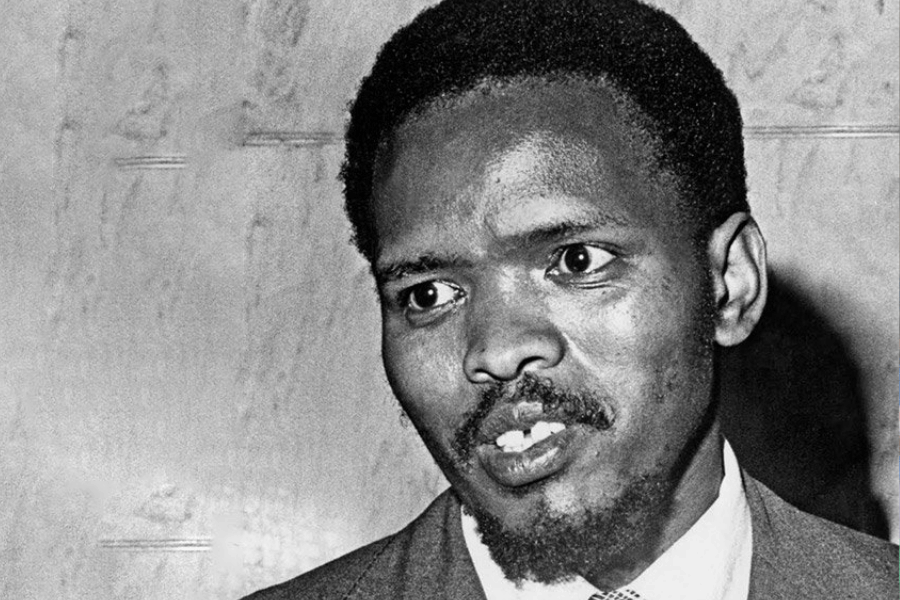
The Azanian People’s Organisation (AZAPO) has renewed its call for justice for slain anti-apartheid activist Steve Biko, saying the reopening of his inquest comes nearly 49 years after his death and followed decades of failure to hold those responsible accountable.
The second inquest into Biko’s death is scheduled to begin on Monday, 24 August 2026, in the High Court in Gqeberha.
Azapo has welcomed the reopening, but warned that the process must go beyond correcting the historical record and uncover the full circumstances surrounding Biko’s death, including identifying those responsible for his torture and murder and exposing institutional complicity in the subsequent cover-up.
The organisation has long maintained that the original inquest, conducted under the apartheid government, was a whitewash and a miscarriage of justice.
Ahead of the reopening, Azapo said it was “deeply regrettable” that the matter was only returning to court almost five decades after Biko’s death.
It said most of those directly responsible for his death were now no longer alive to face justice.
“The call by Azapo and the broader Black Consciousness Movement for justice has been deferred for almost 49 years. Tragically, 32 of those years of delay occurred under a Black-led democratic government,” the organisation said.
Biko died in police custody in September 1977 after suffering severe injuries while detained by apartheid security police.
Azapo said the apartheid regime had attempted to extinguish both Biko and the ideas associated with the Black Consciousness Movement, but had failed to do so.
“We are the product of Biko, and his legacy lives through us,” the organisation said.
The reopening of the inquest follows a longstanding campaign by Azapo and the Biko, Mxenge and Ribeiro families for further legal scrutiny of the circumstances surrounding Biko’s death.
In 1995, Azapo and the families launched a constitutional challenge against provisions of the Promotion of National Unity and Reconciliation Act, arguing that granting amnesty to perpetrators would deny apartheid victims justice.
The Constitutional Court ultimately ruled against the applicants.
Azapo said it had warned at the time that the Truth and Reconciliation Commission’s efforts to restore justice would be undermined if its recommendations were not implemented.
The organisation said the reopening of the inquest therefore represented an opportunity to address what it considers to be an enduring injustice.
“The reopening of the inquest cannot undo the injustice committed against Biko, his family and the people of Azania,” AZAPO said.
“It must, however, uncover the full truth, identify those responsible and expose the institutional complicity that enabled his murder and the subsequent cover-up.”
Azapo said its legal team in the reopened proceedings would be led by Advocate Anton Katz, instructed by Makhangela Attorneys.
The organisation said the case was not merely about revisiting events of the past but about affirming accountability for apartheid-era crimes.
“For Azapo, the pursuit of justice for Steve Biko is not merely about correcting the historical record,” it said.
“It is about affirming that apartheid crimes do not expire and that those responsible for crimes against our people must be held accountable.”