The Presidency has accused Ghana of spearheading what it describes as a coordinated campaign to portray South Africa as isolated from the rest of the African continent following recent anti-illegal immigration protests.
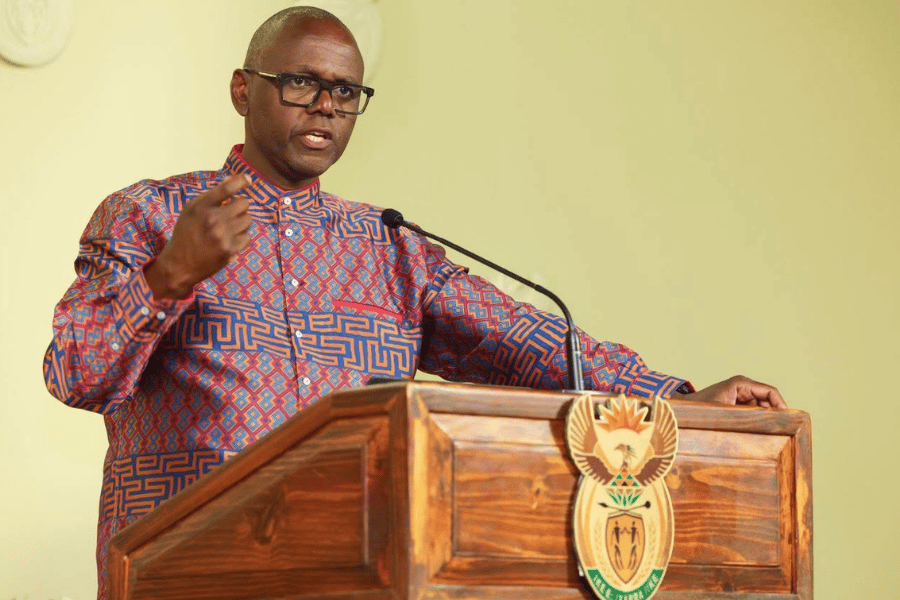
Briefing the media on Wednesday, presidential spokesperson Vincent Magwenya said government had, over the past two months, observed sustained efforts to paint South Africa as a “pariah state”, insisting the country remained firmly integrated into continental affairs.
“We’ve taken note of the campaign, primarily driven by Ghana and, to a lesser extent, Nigeria,” Magwenya said.
He said government “rejects with utmost contempt” suggestions that South Africa had become isolated because of demonstrations targeting illegal immigration.
The Presidency’s response follows recent remarks by Ghana’s High Commissioner to Pretoria warning that South Africa risked becoming isolated on the continent over its handling of migrants. Ghana has also petitioned the African Union to debate South Africa’s treatment of migrants.
Magwenya also confirmed that concerns over remarks made by Ghana’s High Commissioner to South Africa had been formally raised through diplomatic channels.
“Concerns have been directly expressed to the Ghanaian High Commissioner by our Department of International Relations and Cooperation,” he said.
He added that Minister of Justice and Constitutional Development Mmamoloko Kubayi who chairs the Inter-Ministerial Committee dealing with migration issues, had urged the High Commissioner to verify information through South African authorities before making public statements.
Magwenya further pointed to President Cyril Ramaphosa’s continued engagement with African leaders, including convening the Committee of African Heads of State and Government on Climate Change (CAHOSCC) on the sidelines of the African Union summit in Addis Ababa earlier this year.
“These are just a few examples that South Africa is not isolated and can never be isolated from the rest of the African continent,” he said.
He also dismissed speculation that Ghana or Nigeria could nationalise South African-owned businesses in retaliation for recent anti-illegal immigration protests.
Magwenya said the trade relationship between South Africa and both countries was mutually beneficial, noting that companies such as MTN employed thousands of local citizens and contributed significantly to their economies.
“No one is doing anyone a favour. It’s a mutually beneficial trade relationship,” he said.
According to Magwenya, any attempt to nationalise South African-owned assets would undermine investor confidence and damage the economies of the countries involved.
“It will signal that those countries are now closed for trade and business. It will also signal a greater degree of uncertainty about doing business in those countries,” he said.
While acknowledging the speculation surrounding possible retaliatory measures, Magwenya said government would not respond to rumours.
“We’ve heard the noise, and we will only respond to something official,” he said.
He further questioned why Ghana had adopted what he described as an “undiplomatic and unconstructive posture”, arguing there was no evidence that Ghanaian nationals had been disproportionately affected during the recent protests in South Africa.
“There was an incident involving one citizen, and it was not a fatal incident,” Magwenya said.
He added that some political leaders in Ghana had themselves called for constructive engagement between the two countries and had questioned the tone adopted by Ghana’s representatives.
“We’re not anticipating any move until such time there’s something official, at which point we will engage diplomatically,” Magwenya said.