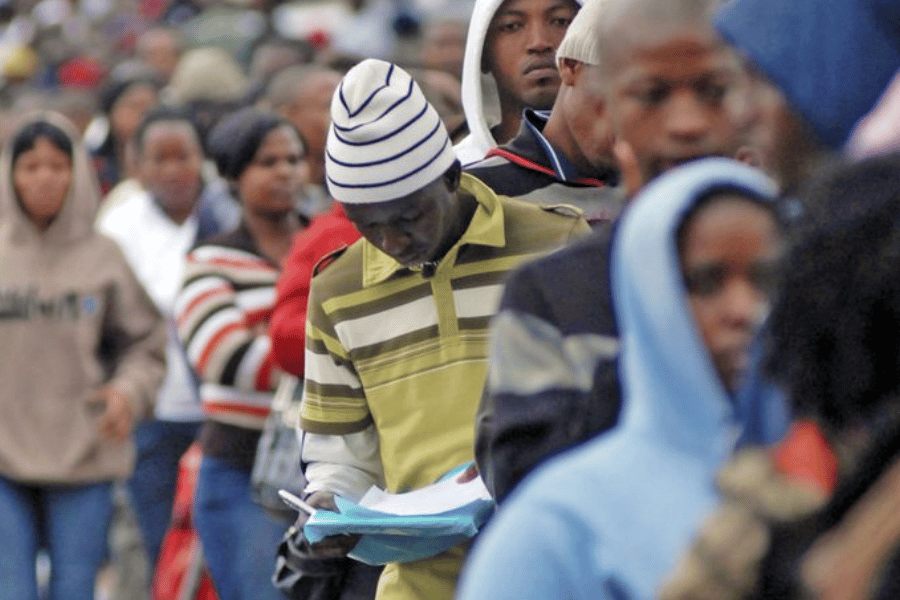
Fifty years after the youth of 1976 stood up for the right to a better future, South Africa finds itself confronting another crisis affecting young people. This generation is not being met with bullets in the streets, but many face a quieter struggle: unemployment, poverty, hopelessness and exclusion from meaningful economic opportunities.
There are moments that leave a lasting mark on you. This is one of them. I write these words with a heavy heart after spending time with young South Africans whose greatest dream is not wealth or success, but simply the chance to work, to support their families and to live with dignity. Their stories are a painful reminder that behind every unemployment statistic is a human life waiting for an opportunity that has yet to come.
This past Wednesday, I visited the Thabo Mbeki Informal Settlement in Diepsloot, and I left with a heavy heart. I listened to young people who are desperate not for handouts, but for an opportunity to work, to provide for their families and to reclaim their dignity. Their pain, frustration and fading hope are a painful reminder that behind every unemployment statistic is a young South African whose future is slipping away. We cannot continue to fail this generation. And this is one of the reasons I say; I have Unfinished Business in COJ.
The dreams that democracy promised have not become reality for millions of young South Africans. Every year thousands leave schools, colleges and universities believing education will open doors. Too often, they discover that there are no doors to open.
South Africa continues to record one of the highest youth unemployment rates in the world. Behind every statistic is a young person whose ambitions have been placed on hold, a parent who cannot retire because they continue supporting adult children, or a graduate who has never received a first opportunity to prove their worth.
The consequences reach far beyond economics. Extended unemployment contributes to poor mental health, family strain, financial insecurity and, in some communities, greater vulnerability to crime, substance abuse and exploitation.
The Thabo Mbeki Informal Settlement in Diepsloot illustrates many of these challenges.Yet the very same man who this settlement was named after can say; “It hurts me when I see things like Operation Dudula… We can’t say the problems we have in this country are caused by people who have migrated to South Africa.” Yet Mbeki has never even visited the place to engage the communities grievances or honour the fact that the place was named after him. Personally, I would honour and treasure anything named after me, add value and make a difference.
Like the rest of the country, Community reports have highlighted high youth unemployment, widespread poverty and limited access to basic services, leaving many families struggling to survive while searching for opportunities.
Youth unemployment is not simply an economic issue; it is becoming a moral one. Every year spent without meaningful work represents lost experience, declining confidence and shrinking prospects. Communities cannot thrive when an entire generation feels forgotten.
Government programmes intended to support entrepreneurship and youth development remain important tools, but they must be accompanied by transparency, measurable outcomes and public accountability. Every rand allocated to job creation and enterprise support should produce tangible results for young people.
There are no simple solutions. Sustainable progress requires economic growth, investment, improved infrastructure, quality education, support for small businesses and practical skills development that connects young people to real employment opportunities.
South Africa’s youth are not asking for charity. They are asking for a fair chance to contribute, to work and to build lives of dignity. The greatest tribute to the generation of 1976 is ensuring that today’s youth inherit not only freedom, but genuine opportunity.
A nation is ultimately judged by what it leaves to its children. South Africa’s young people have waited long enough not for sympathy, but for opportunity. They deserve the dignity of work, the hope of a better future, and the chance to build lives of purpose. The cost of failing another generation will be measured not only in economic terms, but in lost human potential that the country can ill afford to waste.