Municipalities in South Africa have incurred more than R40 billion in irregular expenditure during the 2024/25 financial year despite improvements in audit compliance.
Auditor-General Tsakani Maluleke has warned that poor accountability, deteriorating infrastructure and weakening financial health continue to undermine local government.
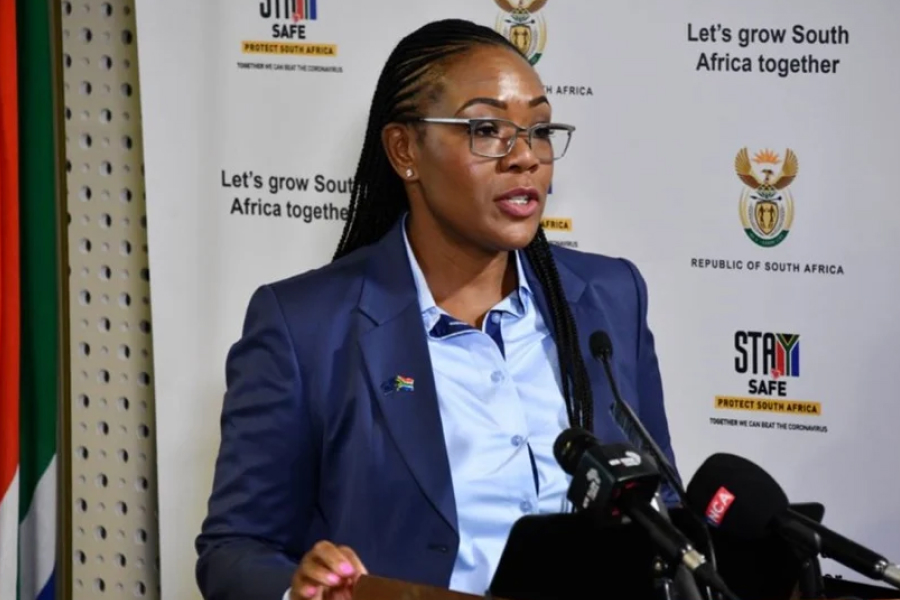
Briefing Parliament’s Portfolio Committee on Cooperative Governance and Traditional Affairs on Wednesday, Maluleke revealed that municipalities achieved a record 98% submission rate for annual financial statements, with only two municipalities failing to submit their accounts on time, compared with ten the previous year.
“What this is saying is that this year, for the very first time, we’ve had a very high level of timely submissions of financial statements for us to audit,” said Maluleke.
“We actually reached a milestone of 98 per cent of submissions by municipalities across the country.”
However, she cautioned though that improved compliance had not translated into meaningful improvements in governance, financial management or service delivery.
Despite this progress, the Auditor-General’s latest report still showed a troubling picture of local government performance across the country.
Of the 257 municipalities audited, only 39 achieved clean audits, while 117 received unqualified audit opinions with findings, 86 received qualified audit opinions, five received adverse opinions and eight received disclaimers. Two audits remain outstanding.
The report found that municipalities incurred R40.14 billion in irregular expenditure during the year, bringing the cumulative total since 2021/22 to R145.21 billion.
More than half of the irregular expenditure stemmed from failures to comply with procurement and competitive bidding requirements.
Municipalities also recorded R13.24 billion in unauthorised expenditure and R6.36 billion in fruitless and wasteful expenditure.
Maluleke said the situation was particularly worrying in Gauteng, where the province’s three metropolitan municipalities had regressed during the current local government administration.
“Not only are audit outcomes going backwards, but we’re seeing that financial health is deteriorating. We’re seeing service delivery begin to collapse. We’re seeing infrastructure degrading,” she said.
“We are also seeing that accountability is still not coming right. Consequence management remains very poor. Irregular expenditure continues to soar.”
She said these trends were especially concerning given Gauteng’s access to financial resources and technical skills.
“The gains we would have expected of a province that has got access to resources, access to talent, that progress is still not evident.”
Gauteng recorded only two clean audits during the reporting period.
The Auditor-General also singled out metropolitan municipalities as a growing area of concern.
Metros account for more than half of local government’s expenditure budget and serve almost 40% of South Africa’s population.
Yet Maluleke said they were the only category of municipality that had regressed overall.
“Local municipalities have improved on a net basis. Intermediate cities have improved. District municipalities have improved on a net basis. Metros are going backwards.”
Even the City of Cape Town, long regarded as a benchmark for municipal governance, lost its clean audit status after findings relating to supply chain management and procurement compliance.
Maluleke said accountability remains one of the sector’s biggest weaknesses.
The Auditor-General identified 162 material irregularities resulting in estimated financial losses of R5.45 billion, while nearly a third of municipalities continued to fail in implementing consequence management against officials responsible for transgressions.
The report also highlights municipalities’ continued dependence on consultants despite limited returns.
A total of 225 municipalities spent R1.6 billion on financial reporting consultants during the year.
Yet 61% of municipalities that used consultants still submitted financial statements containing material misstatements in areas the consultants had specifically been appointed to address.
According to the Auditor-General, 73% of these failures occurred because municipal officials failed to properly review consultants’ work before submitting financial statements.
The findings further point to a growing infrastructure crisis.
Of the infrastructure projects audited, 78% contained findings, while 56% experienced delays averaging 25 months.
More than half suffered cost management problems and 93% of municipalities spent below the required benchmark on repairs and maintenance, accelerating the deterioration of public infrastructure.
Financial health remains another major concern.
The report found that 116 municipalities, representing 45% of the sector, adopted unfunded budgets, while 56 municipalities were assessed as having concerning or unfavourable financial health.
Provincially, the Western Cape remained the strongest performer with 21 clean audits, accounting for more than half of all clean audits nationally.
However, Maluleke warned that even the province was beginning to show signs of regression.
“Unfortunately, the Western Cape has been regressing over the last four years,” she said.
When the current administration began, the province had no disclaimers or adverse audit opinions. However, municipalities such as Kannaland and Laingsburg have since recorded disclaimer and adverse audit outcomes respectively.
“We’re also starting to see pressure in terms of the quality of infrastructure, pressure in terms of even financial health, across a number of municipalities in the Western Cape.”
The Free State and North West remained the only provinces without a single clean audit.
“The Free State, together with the North West, still holds the record for not having any clean audits,” Maluleke said.
Other provinces performed as follows:
•   Eastern Cape: 8 clean audits, making it the second-best performing province.
•   KwaZulu-Natal: 4 clean audits, with no disclaimer audit opinions and only one adverse opinion.
•   Limpopo: 2 clean audits, with no disclaimer or adverse audit opinions recorded.
•   Mpumalanga: 1 clean audit, although financial health concerns remain significant across municipalities.
•   Northern Cape: 1 clean audit, achieved by Frances Baard District Municipality.
•   Free State: 0 clean audits, with ongoing governance, compliance and financial management challenges.
•   North West: 0 clean audits, despite progress in reducing disclaimer audit opinions.
In response to the findings, the South African Local Government Association (SALGA) acknowledged that while progress remained uneven, the sector had recorded important gains over the current local government term.
Salga president Bheke Stofile welcomed the reduction in disclaimer audit opinions from 29 municipalities in 2020/21 to just eight in 2024/25 and said the latest outcomes showed that structured interventions were beginning to yield results.
“The sector is not yet where we want it to be in so far as municipal audit outcomes are concerned, however, we do take note of what the AGSA calls positive shoots that are emerging,” said Stofile.
Salga highlighted that more than 98% of municipalities submitted annual financial statements on time and that all 257 municipalities produced annual performance reports for the first time.
The association nevertheless expressed concern that 39% of municipalities still received audit outcomes below the unqualified audit standard and warned that financial misconduct continued to undermine local government.
Salga also pointed to mounting financial pressures facing municipalities, noting that municipal consumer debt had risen to more than R484 billion by March 2026, severely affecting municipalities’ ability to pay for essential services.
The association called for zero tolerance towards irregular, unauthorised, fruitless and wasteful expenditure and urged municipalities to strengthen accountability mechanisms.
The Auditor-General said the success of the incoming local government administration would depend on improving leadership capability, strengthening governance structures and fostering a culture of accountability.
The report recommends that new municipal leadership prioritise capable and compliant appointments, strengthen internal audit units and audit committees, and ensure swift consequences for poor performance and transgressions.
“The calibre and capability of new leaders will determine the success of the seventh administration,” Maluleke said.