The EFF has accused the DA and ActionSA of backtracking on their opposition to the City of Ekurhuleni’s R71 billion budget, claiming political interests rather than meaningful policy changes led to its eventual adoption.
The budget was passed on Tuesday during a special council sitting after three previous failed attempts, allowing the ANC-led administration to avoid a potential provincial intervention in terms of Section 139 of the Constitution.
The budget received support from 14 political parties, including the DA, ActionSA, the Freedom Front Plus, Inkatha Freedom Party and Patriotic Alliance, among others.
However, the EFF voted against the budget for a fourth consecutive time, maintaining that its concerns regarding service delivery, infrastructure deterioration, outsourcing and the municipality’s financial sustainability had not been addressed.
Reacting to the budget adoption on Tuesday, in a statement, the EFF said the budget adopted by council remained largely unchanged from the version that had previously been rejected on three occasions.
“The reality is that the budget adopted today is substantially the same budget that both the DA and ActionSA rejected three times. What has changed is not the content of the budget but the political calculations of those who have now chosen to support it,” the party said.
The red berets also dismissed claims by the DA that it had secured significant concessions from the ANC administration in exchange for supporting the budget.
The DA had argued that negotiations resulted in a reduction of the proposed property rates increase from 2% to 1.5%, greater protection of infrastructure spending, improved financial oversight measures and commitments aimed at strengthening service delivery.
But the EFF described those claims as an attempt to manufacture policy victories.
“The DA claims that the ANC conceded to demands relating to vehicle procurement and international travel despite the fact that no such allocations existed in the budget under consideration,” the party said.
“Equally hollow are claims that reducing a proposed rates increase from 3% to 1.5% constitutes a victory when residents should not be subjected to additional increases in the absence of a new valuation roll and while municipal services continue to deteriorate.”
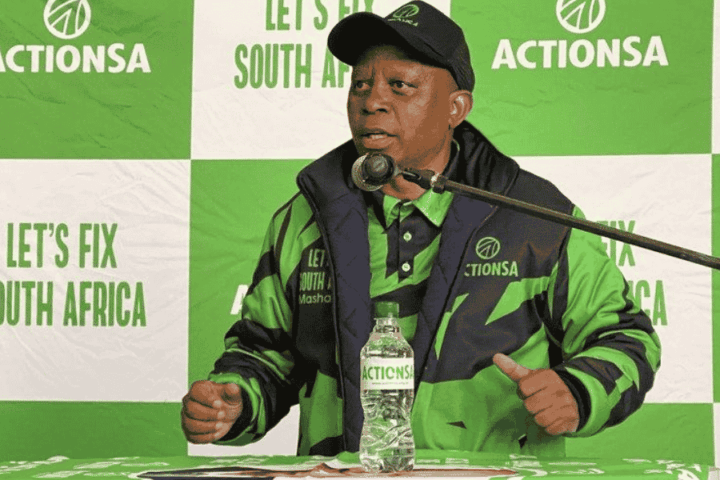
The EFF also took aim at ActionSA’s justification for supporting the budget.
ActionSA had cited an increase in employee-related expenditure as evidence that the municipality was moving towards insourcing services.
However, the EFF argued that the additional allocation was largely driven by salary increases, overtime payments, acting allowances and employee benefits rather than a comprehensive insourcing programme.
“It does not constitute a meaningful insourcing programme, nor does it adequately address the municipality’s vacancy crisis,” the party said.
According to the EFF, Ekurhuleni continues to operate with a vacancy rate of about 27%, while critical service delivery departments remain understaffed.
The party further suggested that political considerations surrounding potential coalition arrangements may have played a role in the budget’s eventual adoption.
“It is increasingly evident that the prospect of an alternative governing arrangement involving the EFF has generated greater urgency amongst these parties than the actual content of the budget itself,” the party said.
The EFF also argued that concerns over a possible provincial intervention if the budget was not passed before the end of June had influenced the decision by some parties to support it.
“In effect, it is the ‘Rooi Gevaar’ and has nothing to do with consideration for the people of Ekurhuleni,” the party said.
The ANC, meanwhile, welcomed the adoption of what it described as a “pro-poor budget”, saying the outcome reflected a collective commitment by political parties to place residents’ interests ahead of political differences.
The ANC regional executive committee thanked the 14 parties that supported the budget and said the adoption of the municipality’s more than R70 billion spending plan would allow critical service delivery and infrastructure programmes to proceed.
“The adoption of this budget reflects a shared determination to place the needs of residents first and accelerate the delivery of quality municipal services across our communities,” the ANC said.
The governing party also defended the revised tariff increases contained in the budget, noting that property rates had been reduced from a proposed 2% increase to 1.5%, while increases for water, sanitation and refuse removal had also been adjusted downward from earlier proposals.
The ANC further highlighted an increase in repairs and maintenance spending from R3.8 billion to R4.6 billion, saying the additional investment would focus on water and sanitation infrastructure, electricity networks, roads, stormwater systems and municipal facilities.
Other measures include the procurement of additional waste compactor trucks and EMPD vehicles, as well as funding for law enforcement initiatives and the establishment of an asphalt batching plant to support road rehabilitation projects.