Cyril Ramaphosa has declared that he will not resign from office despite mounting political pressure following a landmark Constitutional Court ruling that revived the Section 89 report linked to the Phala Phala scandal.
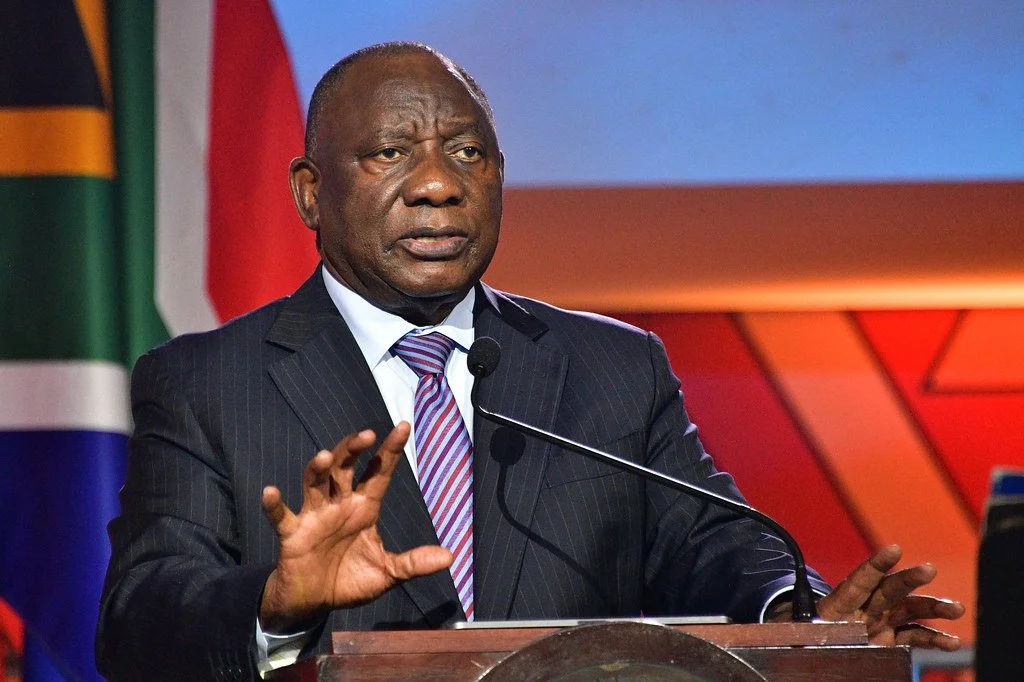
In a short-notice address to the nation on Monday, Ramaphosa said there was “nothing” in the Constitutional Court judgment compelling him to step down and made it clear that he intends to remain in office.
“I want to make it clear that I am not resigning,” the president said.
“To resign now would be to give in to those who would reverse our rebuilding of society. I fully intend to continue serving the people of South Africa.”
The president’s remarks came days after the Constitutional Court ruled that the National Assembly acted unlawfully when it voted in December 2022 to dismiss the Section 89 Independent Panel report into the Phala Phala matter.
The ruling effectively revived the report and reopened the possibility of a full impeachment inquiry into Ramaphosa — one of the most politically damaging developments of his presidency.
Ramaphosa acknowledged that he has faced increasing calls to resign following the judgment, particularly from opposition parties and political rivals. However, he also pointed out that supporters have urged him to remain in office, arguing that the Constitutional Court made no findings on the merits of the Phala Phala allegations themselves.
The president maintained that he has committed no crime, stolen no public money and cooperated fully with all investigations into the matter.
He reiterated that he disputes the findings of the independent panel, which previously concluded that there was prima facie evidence suggesting he may have violated the Constitution and anti-corruption laws.
According to Ramaphosa, his legal team has advised him to relaunch his court challenge against the Section 89 panel report now that the Constitutional Court has restored it.
He insisted that the decision to seek a review is not an act of defiance, but rather an effort to ensure that any process carrying such serious constitutional consequences is itself lawful and fair.
“I have always maintained my innocence,” Ramaphosa said, while reaffirming his respect for the judiciary, the Constitution and the rule of law.
The Phala Phala scandal first erupted in 2022 after former spy boss Arthur Fraser accused Ramaphosa of attempting to conceal the theft of foreign currency from his Phala Phala game farm in Limpopo.
Initial claims alleged that as much as $4 million had been stolen from the farm in 2020. It later emerged that approximately $580,000 was allegedly taken — money Ramaphosa said came from the sale of buffalo to a Sudanese businessman.
Although Ramaphosa has never been criminally charged, the scandal has remained a political cloud over his presidency and has fuelled accusations of hypocrisy against a leader who built much of his political identity around anti-corruption and constitutional accountability.
The Constitutional Court’s ruling now places Parliament under pressure to properly process the Section 89 report and determine whether impeachment proceedings should move forward.
The development has intensified divisions within the ANC, with Ramaphosa’s allies arguing that the president is being unfairly targeted, while his opponents believe the ruling has exposed weaknesses in Parliament’s earlier handling of the matter.
For now, Ramaphosa appears determined to fight politically and legally rather than step aside.
But with renewed impeachment pressure, growing opposition attacks and increasing internal ANC tensions, the Phala Phala saga is once again threatening to destabilise both his presidency and the governing party itself.