Deputy President Paul Mashatile took the ANC’s election campaign off the stage and into the homes of Ivory Park on Friday, leading a door-to-door blitz in Tembisa to confront the service delivery crisis that has become the party’s biggest electoral liability.
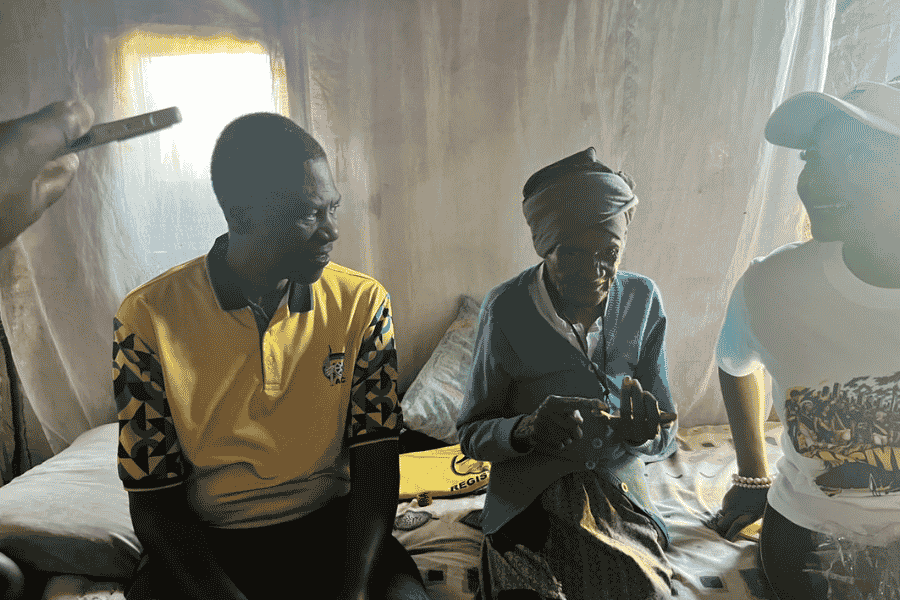
After being welcomed by the ANC Women’s League at Eqinisweni Secondary School, Mashatile and ANC candidates fanned out across the settlement for a series of household visits – an old ANC campaign tactic revived as the party battles to reconnect with voters in Gauteng townships ahead of the November local government elections.
In about seven households, Mashatile sat with residents inside cramped RDP houses and shacks to hear first-hand about overcrowding, electricity sharing and unemployment.
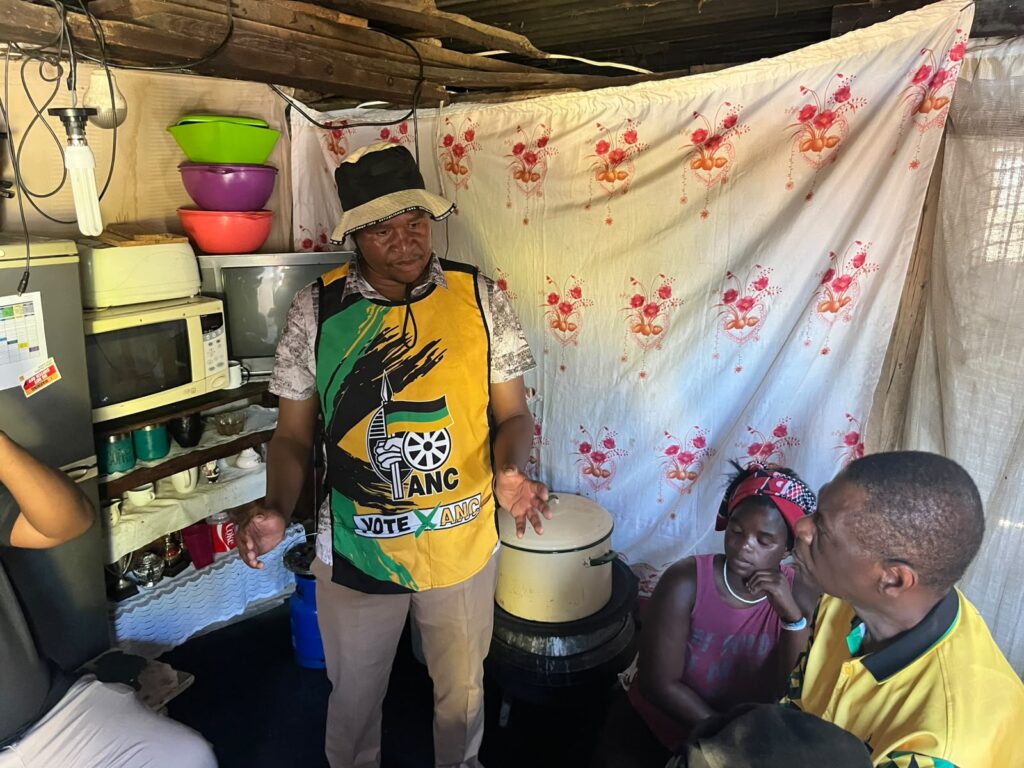
One resident told him directly that the houses are too small to give families dignity.
“People can’t get their own spaces because the houses in the area are too small,” said an ANC volunteer who accompanied the deputy president.
Electricity emerged as the dominant complaint. Households are forced to share connections and navigate illegal connections and load-shedding hangovers, with families in Ivory Park saying they struggle to keep lights on and food cold.
The visits were meant to show that the ANC is still listening – a message Mashatile has been tasked with driving as President Cyril Ramaphosa’s deputy and the party’s chief campaigner in Gauteng, where the ANC lost its majority in the 2024 general election and is now fighting to hold onto metros.
Mashatile praised the ground work being done by ANC volunteers.
“The volunteers are here working every day,” Mashatile said.
But he was also forced to concede that the problems raised on the ground cannot be fixed with a campaign visit.
“It’s important that we do focus and make sure that we address these issues,” he said. “The challenges are not going to disappear overnight.”
The remarks reflect the balancing act facing Mashatile and the ANC in communities like Ivory Park – a sprawling settlement in Midrand that has become a symbol of rapid urbanisation, youth unemployment and stretched municipal services. While the City of Johannesburg is governed by a fragile coalition, residents blame all spheres of government for failing to deliver decent housing, reliable power and proper sanitation.
On the campaign trail, Mashatile said the priority must be resolution, not rhetoric.
He added that work was underway in the community, being handled by relevant government officials to address electricity challenges, but acknowledged that residents are demanding faster results.
The deputy president also stressed the importance of education, saying getting young people back into school and into skills programmes was critical to breaking the cycle of poverty in places like Ivory Park.
The door-to-door engagements are part of a broader ANC strategy to move away from stadium rallies and return to direct voter contact in wards where voter apathy and anger over service delivery have driven turnout down.
For Mashatile, who is also seen as a future ANC leadership contender, the Ivory Park visit was both a campaign stop and a test of whether the party can still claim to be rooted in communities after 30 years in power.
As one resident put it while waiting for Mashatile at the entrance to Eqinisweni, patience is wearing thin: “Leadership doesn’t stick to his time.”