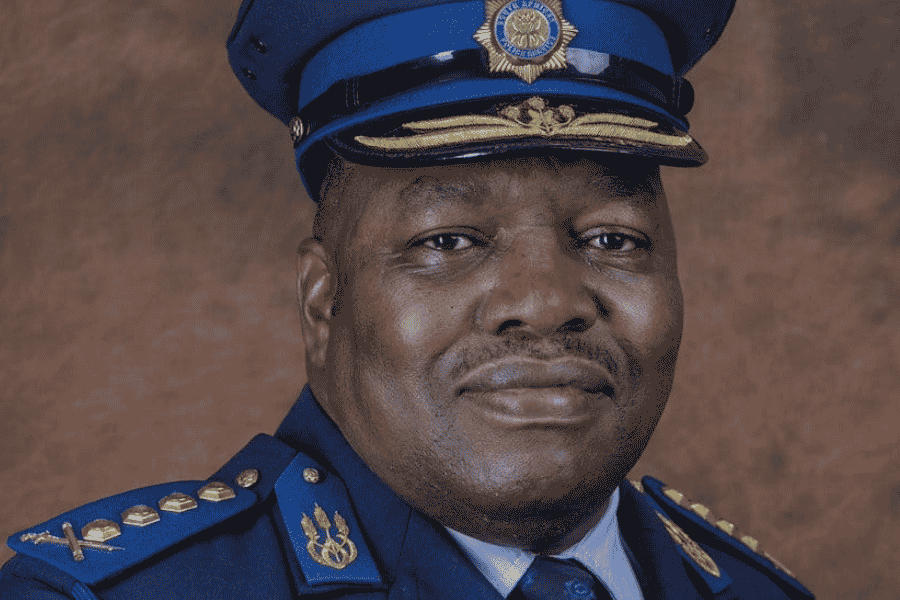
National police commissioner General Fannie Masemola has vowed to unite the South African Police Service (SAPS), strengthen frontline policing and intensify the fight against organised crime following his return to office after President Cyril Ramaphosa lifted his precautionary suspension.
Masemola, who thanked Ramaphosa for lifting the suspension following the withdrawal of charges against him by the National Prosecuting Authority (NPA), said his focus would be on institutional renewal, professional policing and restoring public confidence in the police service.
“I return to office determined to unite the organisation, strengthen its internal integrity, and advance our constitutional responsibility to serve and protect the people of South Africa,” Masemola said.
He stressed that the SAPS’s constitutional mandate must take precedence over individual interests, warning senior management against divisions, mistrust and competing personal agendas.
“We cannot build a strong police service on divisions, mistrust, or competing personal interests. We must build it on professionalism, integrity, ethical leadership, mutual respect and shared commitment to our constitutional mandate,” he said.
Masemola said differences within the organisation should be resolved constructively, with members of senior management expected to demonstrate discipline, maturity and collective responsibility.
He also acknowledged Lieutenant General Patricia Dimpane, who served as acting national commissioner during his absence, saying he would formally review the handover report outlining operational priorities, progress made and outstanding matters.
Masemola said the police service needed to focus on meeting the targets set out in its annual performance plan, while strengthening its capacity to tackle organised crime, which he described as a longstanding challenge.
He said the final report of the Madlanga Commission of Inquiry would also be important in strengthening accountability, addressing systemic weaknesses and identifying reforms needed within the police service.
“We must be prepared to carefully consider and implement the relevant recommendations to ensure that we make [the organisation] stronger, more transparent and more accountable to the people we serve,” he said.
Masemola added that the effectiveness of the police service should be measured by the experience of ordinary South Africans when they seek assistance at their local police stations.
He said resources would be directed towards frontline policing, including equipment, technology and additional personnel, while recruitment would continue to fill vacant posts.
Provincial commissioners and station commanders were urged to remain responsive to the needs of their communities and ensure that police stations were accessible, adequately resourced and professionally managed.
On preparations for the upcoming local government elections, Masemola said he had instructed the police leadership to begin assessing Gauteng’s state of readiness, with other provinces to follow.
He expressed confidence that the police would be able to ensure that the elections took place in an environment conducive to free and fair democratic participation.
He also called on political campaigners to exercise patience and allow all parties and individuals to exercise their democratic rights without unnecessary disruption.
Masemola said the police would simultaneously focus on preparations for the festive season, with the aim of ensuring peace and stability as South Africans travel and visitors enter the country.
He acknowledged that the SAPS faced resource constraints but insisted that available resources needed to be deployed strategically where they were most needed.
While conceding that the police service was not performing at the level it should, Masemola defended the majority of officers, saying many continued to serve communities despite the challenges facing the institution.
He called on communities, businesses, civil society organisations, other government departments and security partners to work together in fighting crime.
Masemola also referred to the government’s plan to address gender-based violence, calling for cooperation across sectors to ensure that women and other vulnerable people could live in safety.
“The task before us is to unite the organisation, strengthen frontline capacity, confront crime decisively, and regain public confidence through consistent action,” he said.