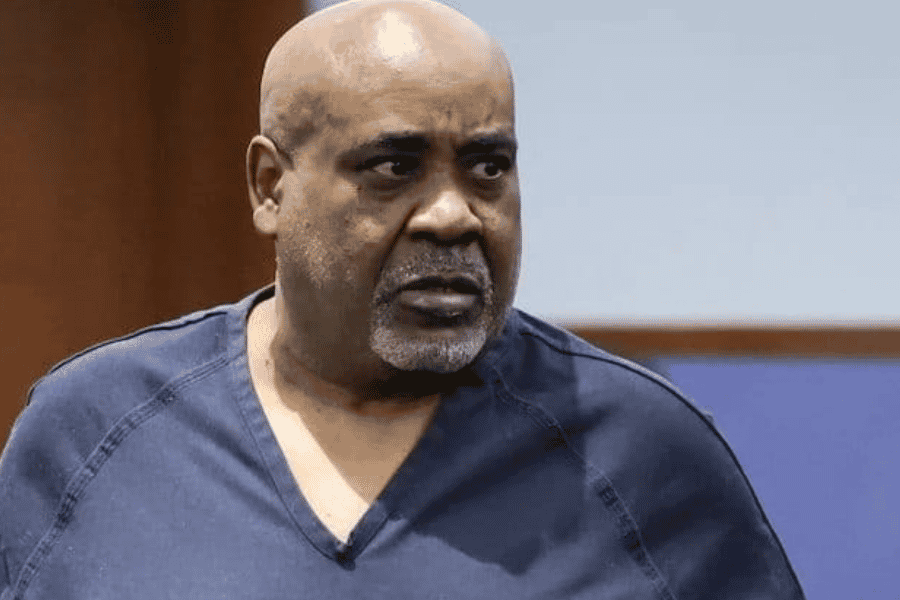
Former gang leader Duane “Keffe D” Davis has been sentenced to between 40 years and life in prison for his role in orchestrating the murder of legendary rapper Tupac Shakur.
Davis, 63, was convicted in September of first-degree murder with the use of a deadly weapon over the fatal drive-by shooting in Las Vegas on 7 September 1996. He has indicated that he intends to appeal the conviction.
Although Davis was not accused of pulling the trigger, prosecutors maintained that he organised the group responsible for the killing. In his memoir, he acknowledged supplying the firearm used in the attack.
His conviction marked the first successful prosecution in a murder investigation that has captivated hip-hop fans and investigators for almost three decades.
During Tuesday’s sentencing proceedings, prosecutor Marc DiGiacomo accused Davis of repeatedly boasting in public about his involvement in Shakur’s death over the years.
DiGiacomo said the killing had consequences that extended far beyond the victim’s immediate circle, affecting people across the world.
Shakur’s sister, Sekyiwa Shakur, addressed the court, describing the devastating impact her brother’s death had on their family.
“The loss of Tupac, for a long time, crippled my family,” she said.
She described her brother as a man with enormous potential who wanted to make a positive difference in society.
“He had so much promise, intentions for a better world,” she said, adding that Shakur had wanted to support and uplift his community.
Sekyiwa urged the judge to impose the harshest possible punishment, telling Davis that he would have years behind bars to reflect on the consequences of his actions.
She told him he would have to “contemplate what you’ve done to the world, not just to me”.
Shakur’s brother, Maurice Shakur, also appealed to the court to hand down the maximum possible sentence.
When Judge Carli Kierny gave Davis an opportunity to address the court before sentencing, he said he had nothing further to add.
“I’m good. I’m gonna appeal this case for sure,” Davis responded.
In delivering the sentence, Kierny condemned the taking of another person’s life and the future they could have had.
“You don’t get to take a man from his family,” she told Davis.
“You don’t get to take his very life, his whole future from him, and just walk away from it. Especially when that man is Tupac Shakur. The world never forgot about him and his death.”
A central part of the prosecution’s case was Davis’s own public statements, in which he repeatedly claimed that he had been inside the white Cadillac from which the fatal shots were fired.
In 2008, Davis reportedly disclosed details of his involvement during a confidential police interview connected to the investigation into the murder of fellow rapper Christopher Wallace, better known as The Notorious B.I.G.
Wallace was also killed in a shooting, just months after Shakur’s death.
Davis had received protection from criminal prosecution in connection with information he provided to authorities during that interview.
However, he later discussed his alleged role in Shakur’s killing in greater detail in his 2019 memoir, Compton Street Legend, and in subsequent media interviews.
Those public disclosures ultimately undermined the protection agreement he had relied on, paving the way for prosecutors to pursue charges against him.
A judge subsequently ruled that the recording of his 2008 police interview could be admitted as evidence during his murder trial.
Journalist Cathy Scott, who covered Shakur’s killing during the 1990s and later wrote a book about the case, suggested that Davis may not have realised there was no time limit for prosecuting murder.
Scott told the BBC World Service’s Newsday programme that the combination of Shakur’s global fame and the location of the killing helped turn the case into an international media sensation.
She said the mystery surrounding the unsolved murder had sustained public interest for decades, making the case even more prominent as the years passed.
Shakur was 25 when he was shot dead, having already established himself as one of hip-hop’s most influential artists.
The rapper went on to sell more than 75 million records worldwide, cementing his status as a major figure in music and popular culture.
For nearly 30 years, his murder remained among the most widely known unsolved killings in the United States, fuelling numerous conspiracy theories before Davis’s conviction.
During the trial, Davis’s defence team argued that his claims about the killing were fabricated, suggesting that he had exaggerated his involvement to attract attention, promote his book and make money.
Prosecutors, however, maintained that Davis, a former leader of the South Side Compton Crips street gang, had helped plan the murder and provided the weapon used in the shooting.
They alleged that Davis’s nephew, Orlando Anderson, fired the shots that killed Shakur.
Anderson, who denied involvement in the rapper’s murder, died in an unrelated shooting in 1998.