The Department of Agriculture has admitted it ran out of money to finish the rules needed to bring South Africa’s new farmland protection law into force.
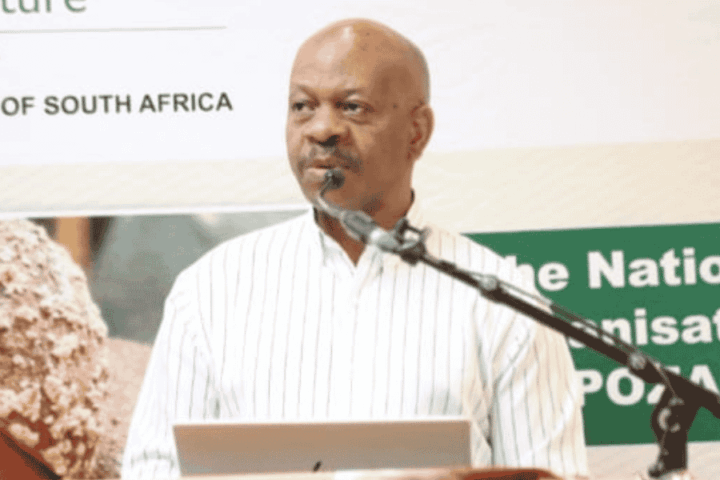
Deputy director-general Dipepeneneng Serage told Parliament’s Portfolio Committee on Agriculture on Tuesday, October 13, that the work had to stop.
The department pays the Agricultural Research Council (ARC) to do the science behind the regulations for the Preservation and Development of Agricultural Land Act (PDALA).
“At the moment, we have had to hold on to the process because we ran out of financial muscle to procure the services of the Agricultural Research Council. And as such, that’s why we would have a delay,” Serage said.
He said the ARC does not “do it for free”.
“Up to a point, we were able to afford their services. At the moment, we are still lobbying funding so that we can procure them again,” he said.
The law was signed in 2024. It is still not in force.
That means farmland is still governed by the Subdivision of Agricultural Land Act of 1970.
Serage said his office gets more than 20 applications a week from people who want to carve up farmland or use it for something else.
“On my table at any given stage, there will be more than 20 applications per week seeking to either subdivide or to change land use,” he said.
The money problem goes beyond the ARC.
The new law depends on an online system that will map every piece of farmland in the country. It has not been built, and there is no money for it.
“We have not yet procured. We are estimating about R5 million. That is the estimate. We are still mobilising funding within the department to ensure that we prioritise this funding so that we can start with the development of the system as soon as possible,” Serage said.
The department also does not have enough staff to run the new law.
“This requires additional boots on the ground than we already have,” Serage said.
He said the same directorate and resources currently run both the 1970 law and the Conservation of Agricultural Resources Act. The new law needs its own unit.
The department now hopes the law will be in force by the end of March 2027.
“We hope by the end of March next year to have the guidelines ready and we hope to have this law commenced with,” Serage said.
Later, he told MPs: “We’re not going to rush this for the sake of meeting the deadlines.” He said the department was still on course for March 2027.
Committee chairperson Nomasonto Evelyn Motaung asked what caused the delays with the ARC and what the revised schedule was.
ANC MP Sharon Davis asked what was causing the delays and what was being done to stop further delays.
Lydia Bosoga, acting chief director for natural resource management, said some provinces asked for an extra 30 days after a 90-day comment period. Commodity groups also had to be consulted.
Serage said the old law has big gaps. It gives the department no say over land owned by the state.
“In the old law, Eskom is a state organ, and over the land that they owned we had no jurisdiction. But in the new law, we do,” he said.
The 1970 law also leaves out land in the former homelands and agricultural holdings.
The new Act was assented to by the President on 20 December 2024. The department published draft regulations in March 2026 and gave the public until 26 May 2026 to comment.
In December 2025, the department told Parliament it was treating the regulations as a priority, and that the new Act would take effect once they were completed, with the 1970 law repealed at the same time.
The 1970 law was supposed to be scrapped decades ago. It was repealed by an Act passed in 1998, but that repeal has never come into effect.