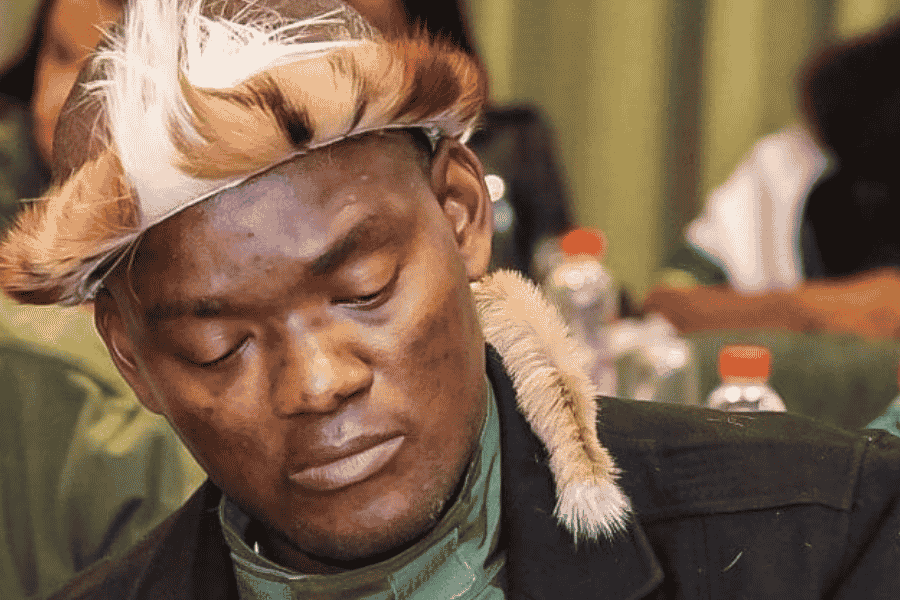
An MK Party MP, Zwelakhe Elija Mthethwa has accused the Department of Agriculture of leaving traditional leaders out of consultations on two new laws that affect millions of people living on rural land.
Mthethwa raised the complaint in Parliament’s Portfolio Committee on Agriculture on Tuesday,. The department was briefing MPs on the Preservation and Development of Agricultural Land Act and the Plant Health Act.
Mthethwa said he had checked the department’s list of stakeholders, and amakhosi were not on it.
“Our stakeholders, kings, amakhosi, are not included and that is unfortunate. Once you start talking about plants and you start talking about land, we are a stakeholder of 25 million residing in rural areas under traditional authorities. So it means we have to have a say in anything that touches these sectors, but we were not consulted,” he said.
Earlier, deputy director-general Dipepeneneng Serage had shown MPs photographs from the department’s consultation meetings.
“I can confirm that there is no picture of us. So it means we were not included,” he said.
He said traditional leadership is “an institution recognised by the Constitution, but it is not being consulted”.
He warned that without amakhosi’s views, the laws would end up “serving a particular narrative”.
Mthethwa also said black communities had been left behind since 1994. He claimed white people still control most agricultural land and private game farms.
“I can confirm that blacks are left behind,” he said.
Serage insisted the department had consulted traditional leaders.
“I can confirm that the bill was consulted even up to amakhosi, the House of the Khoi-San and traditional leaders. We appeared there. We may not have taken pictures, obviously, but we have consulted. We’ve got a list of the areas that we went to. This was during the sixth administration,” he said.
He promised that traditional leaders would be consulted again when provincial agricultural sector plans are finalised.
Director-general Mooketsa Ramasodi said Mthethwa had raised “a very pregnant issue that needs to be looked at broadly.”
He said almost 8% of the country’s land is not being farmed and much of it is in communal areas under traditional leaders.
“We want to bring it back into production,” he said.
Mthethwa also asked whether the farmland law was really a land law that belonged with the land reform department.
“It is driven from the department of agriculture who don’t have a mandate on land affairs issues,” he said.
Serage disagreed. He said the law does not deal with who owns land but with how it is used.
“PDALA is an agricultural law, not a land law,” he said.
Mthethwa also asked which law takes precedence on communal land, permission to occupy, private property rights or the new farmland law. The department did not answer that question.
Both laws were signed in 2024. Neither is in force yet.