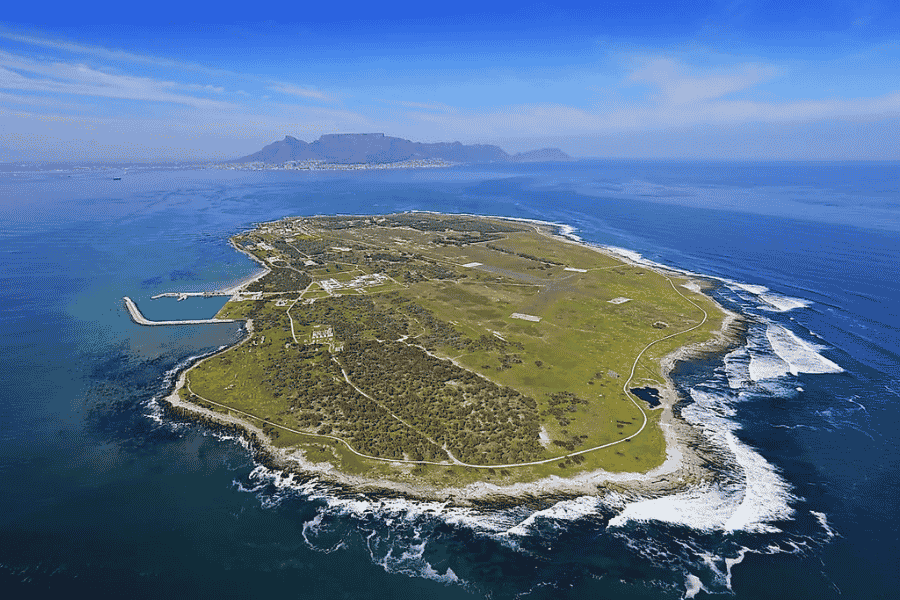
Robben Island Museum (RIM) has received an adverse audit opinion for the second year running.
Its books are so unreliable that the Auditor-General could not verify R101.5 million in general expenditure.
The museum also overspent its budget by R55 million.
It did not investigate its irregular expenditure, and its audit committee barely functioned for most of the year.
The findings were presented to Parliament’s Portfolio Committee on Sport, Arts and Culture on 1 October in the Auditor-General of South Africa’s (AGSA) 2025/26 budget review briefing.
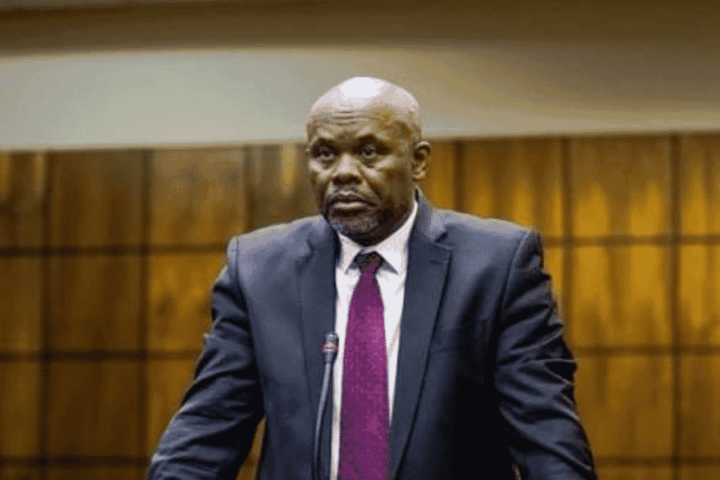
Committee chairperson Joe McGluwa warned that the museum’s governance failures could threaten its future.
“It actually needs a complete independent forensic audit,” he told the meeting.
He added that the committee needed to prevent the entity from being shut down because of weak governance.
Robben Island Museum was the only entity among the Department of Sport, Arts and Culture’s 29 auditees to receive an adverse opinion.
An adverse opinion means the financial statements contain material misstatements so widespread that they cannot be relied upon.
The AGSA could not obtain sufficient evidence to verify the museum’s revenue from services, amounts owed to suppliers, provisions, contingent liabilities and the R101.5 million in general expenditure.
The figures it could verify were riddled with errors.
Cash was overstated by R19.5 million, while amounts owed to the museum were understated by the same amount.
General expenditure was overstated by R14.1 million, and financial instruments by R24.8 million.
Government grants were overstated by R4.3 million because expenditure that did not meet grant conditions was counted against them.
The AGSA also found errors in ticket sales administration fees and ticket refunds. Even basic arithmetic errors in adding up columns contributed to the misstatements.
Provisions for legal fees and irregular expenditure were understated. The AGSA said it could not quantify either amount.
The R55 million overspending was largely attributed to inadequate budget and expenditure monitoring controls.
Much of the museum’s irregular expenditure arose from payments to suppliers whose contracts had expired.
Contracts worth more than R1 million were also awarded without competitive bidding.
Because the museum did not investigate its irregular expenditure, the AGSA could not establish whether any officials had faced disciplinary action.
The museum is carrying R122.99 million in historical irregular expenditure that remains unresolved. It is the second-largest outstanding balance among the department’s entities.
AGSA said that this was because consequence management was not prioritized.
The museum also failed to take adequate steps to collect all the revenue owed to it.
AGSA also found that the museum’s audit committee was largely non-functional for most of the year.
Its outsourced internal auditor was kept on through repeated short-term extensions, which delayed planned audits.
AGSA concluded that governance by the museum’s council, management, audit committee and internal audit function was ineffective.
Vacancies made matters worse. The Chief Executive Officer and Chief Financial Officer posts remained vacant for an extended period. The museum also had no permanent senior manager for supply chain management.
The failures reached the museum’s core mandate.
The AGSA found that RIM had not prioritised its main objective, giving visitors an inclusive, holistic and balanced interpretation of Robben Island as a tourism experience.
Many performance targets were crammed into the fourth quarter, which the AGSA said increased the risk to their delivery.
The latest findings follow an adverse opinion for 2024/25 as well.
That year, the AGSA could not obtain sufficient evidence for key revenue streams and found inaccurate cash and expenditure records.
In June 2025, AGSA issued a material irregularity against the museum after it missed the 31 May deadline to submit its 2024/25 financial statements. They were eventually submitted on 9 August 2025.
The museum’s former CFO, Karabo Ramela, was dismissed for alleged fraud following a disciplinary hearing.
He was accused of falsely claiming membership of the South African Institute of Chartered Accountants (SAICA) when he was appointed.
In July, the Pension Funds Adjudicator dismissed his application to have his R389,534.33 withdrawal benefit unfrozen. The ruling allows his pension fund to withhold the money pending criminal proceedings.
Ramela disputed the allegations. In an affidavit, he said his SAICA membership had lapsed because of unpaid fees, not misrepresentation.