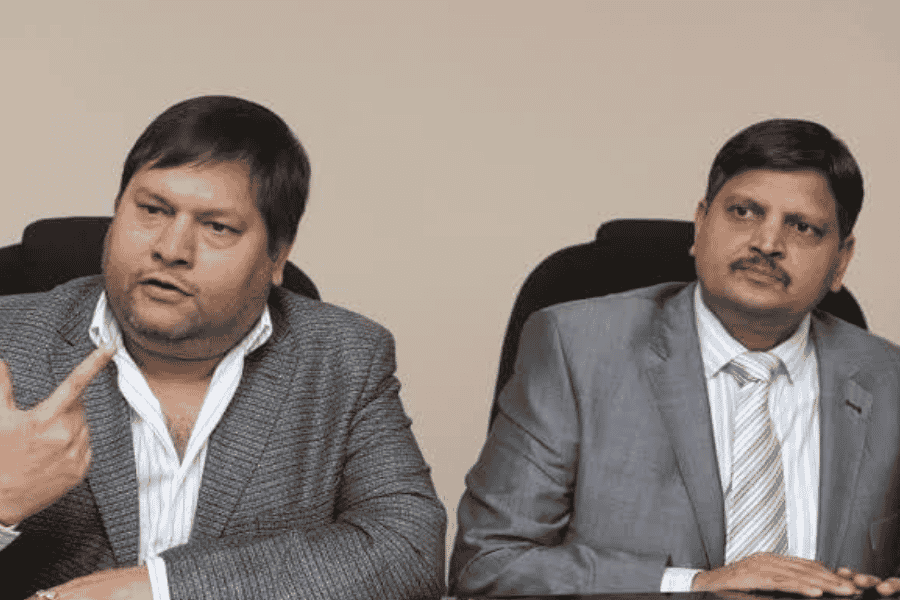
Two company directors and three mining companies linked to the Gupta family have been convicted of fraud and money laundering involving R107.5 million in mine rehabilitation funds.
The Investigating Directorate Against Corruption (IDAC) spokesperson Henry Mamothame confirmed that the Gauteng Division of the High Court in Johannesburg convicted Ronica Ragavan, Pushpaveni Ugeshni Govender, Optimum Coal Mine (Pty) Ltd, Koornfontein Mines (Pty) Ltd and Tegeta Exploration and Resources (Pty) Ltd.
The accused were convicted of unlawfully using funds held in two mine rehabilitation trusts, which were meant to repair environmental damage caused by mining operations at the Optimum and Koornfontein coal mines in Mpumalanga.
Judge Mudunwazi Makamu convicted the accused on four counts involving fraud and money laundering.
Ragavan, Govender, Optimum Coal Mine and Tegeta were convicted of fraud and money laundering relating to R7.5 million from the Optimum Mine Rehabilitation Trust.
Ragavan, Govender, Koornfontein Mines and Tegeta were also convicted of fraud and money laundering involving R100 million from the Koornfontein Rehabilitation Trust.
However, former deputy director-general of the then Department of Mineral Resources, Maleatlana Joel Raphela, was found not guilty on all charges against him.
The court heard that the funds were held in rehabilitation trusts in accordance with legal requirements to ensure that mining companies could rehabilitate land damaged by their operations.
The National Environmental Management Act and its financial provision regulations require mining right holders to set aside money specifically for rehabilitation purposes.
During the trial, the state presented evidence that Tegeta acquired Optimum Coal Mine and Koornfontein Mines from Glencore in a transaction implemented on April 8, 2016. The acquisition also gave Tegeta control of the mines’ rehabilitation trusts.
On February 1, 2016, the Optimum trust held approximately R1.44 billion, while the Koornfontein trust held about R278.5 million.
In the Optimum matter, R7.5 million was transferred from the trust’s Standard Bank account to an Optimum Coal Mine account on May 23, 2016.
Ragavan and Govender had signed a letter requesting the transfer. The state argued that the bank had been falsely informed that the transfer was authorised and that the money would be used for rehabilitation work.
On the same day, the R7.5 million was combined with R9.5 million from Tegeta and ultimately formed part of a R26.4 million payment to mining contractor Klipbank Mining for underground mining work carried out in April 2016.
The court heard that rehabilitation work was subsequently undertaken using the funds, but the money was never repaid to the trust.
In the Koornfontein matter, the state told the court that approximately R280 million held by the rehabilitation trust was transferred from First National Bank to the Bank of Baroda in May 2016.
On May 5, 2016, the Department of Mineral Resources granted Tegeta approval in principle to use the trust funds for concurrent rehabilitation, subject to three conditions. However, the version of the approval letter submitted to the Bank of Baroda did not contain those conditions.
On June 6, 2016, R170 million from the trust was placed in a fixed deposit and pledged as security for a R150 million loan facility granted to Koornfontein Mines.
The bank received written undertakings that the loan would be used exclusively for mine rehabilitation.
However, when the bank paid out R100 million on June 13, 2016, the money moved through Koornfontein Mines and Tegeta accounts before reaching a Tegeta account at the State Bank of India within two days.
Of the R100 million, R67.8 million was subsequently paid to mining contractors Klipbank Mining and Coalcor Mining. A further R30 million was transferred back to the Bank of Baroda and paid to other companies, including Koornfontein Mines and Optimum Coal Mine.
The state established that none of the R100 million was used for rehabilitation work at Koornfontein. The R170 million pledged as security also remained at risk for a year.
The matter has been postponed to December 1, 2026, for sentencing proceedings. Ragavan and Govender’s bail was extended until the matter is finalised.
National Director of Public Prosecutions Adv Andy Mothibi welcomed the convictions, saying rehabilitation trusts were established to protect communities from bearing the cost of environmental damage caused by mining.
“Rehabilitation trusts exist to ensure that surrounding communities are not left to carry the cost of the damage mining leaves behind,” Mothibi said.
“We commend the prosecution and investigation team for securing such a crucial conviction. We remain committed in the fight against corruption.”