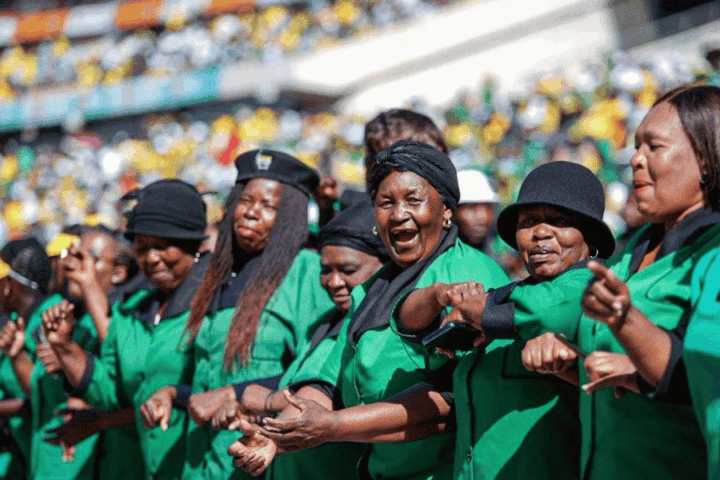
HOME AFFAIRS Minister Leon Schreiber has been accused of abandoning the political frontline as protests over South Africa’s asylum rules spread to Durban and Soweto.
The MPs are demanding to know why he was nowhere to be seen while public anger over a Constitutional Court ruling escalated.
Schreiber was also absent when Parliament’s Portfolio Committee on Home Affairs met on Friday, 9 October. Both he and his deputy sent apologies, but no reason was given for the minister’s absence.
EFF MP Thapelo Mogale led the attack, accusing the DA minister of disappearing while misinformation about the Constitutional Court judgment fuelled tensions.
“What I want to highlight as a point of concern from our side is the total lack of visibility from the DA Minister of Home Affairs while this issue is playing out. It’s as though the department has now been taken over by the IMC. It’s the IMC that is leading the whole process now. We don’t see the minister. Why? Where is the minister?” Mogale said.
He accused Schreiber of failing to take visible political leadership, arguing that the minister should have been at the forefront of correcting false claims about the judgment before they contributed to public unrest.
Mogale said this was not the first time Schreiber had failed to take the lead during a contentious immigration dispute. He also criticised the minister’s response to the protests on 30 June, when false claims about immigration law circulated.
“The judgment is not saying people must be given asylum status. It’s not saying that. But those are the mistruths, misinformation and disinformation that the minister, as the political head of this department, should have been at the forefront of dealing with,” he said.
Mogale warned that when the department failed to communicate, misinformation filled the vacuum and tensions spilled onto the streets.
“The minister must be at the forefront of addressing these issues,” he said.
Patriotic Alliance MP Millicent Lorato Mathopa backed the criticism, warning that Parliament could not properly hold the department accountable without clear answers from its leadership.
She claimed media organisations were struggling to get responses from Home Affairs, alleging that the department had agreed to interviews only to withdraw at the last minute.
“Clearly, there was not enough communication for a judgment that was passed in July already,” she said.
But DA MP Adrian Christopher Roos defended Schreiber, saying the minister had responded to the misinformation and referred the matter to the Electoral Commission of South Africa (IEC).
“The minister put out a communication straight away, refuted the misinformation, and reported the misinformation case to the IEC immediately on the same day for investigation, and the IMC was convened,” Roos said.
He argued that the Inter-Ministerial Committee (IMC) was the appropriate structure to coordinate the government’s response, particularly because Home Affairs did not have the powers to police public gatherings.
“Home Affairs cannot police, for example, around the precinct,” he said. “The IMC is the correct forum to be looking at this at this point in time.”
The political clash unfolded as MPs sought answers about Home Affairs’ handling of the Constitutional Court judgment and the subsequent directive issued to implement it.
ANC MP Moleboheng Modise-Mpya called for an urgent briefing by the Immigration Branch, led by the minister, to explain the sequence of decisions.
She said the committee needed to establish “what led to that first decision to issue that directive and subsequently to the current withdrawal”.
Committee chairperson Mosa Steve Chabane said MPs had not been briefed on the decision to withdraw the directive.
“The concerns of South Africans are the concerns we share with them, but the rule of law must also take its course,” Chabane said.
The committee resolved to convene a physical joint meeting with the Portfolio Committee on Employment and Labour. The ministers and deputy ministers of Home Affairs and Employment and Labour will be invited, alongside representatives of the Border Management Authority and the Refugee Appeals Authority.
The committee will also seek approval to visit one or two refugee reception offices.
The Constitutional Court ruled on 7 July in a case brought by the Scalabrini Centre of Cape Town. The judgment means asylum seekers cannot be prevented from applying for asylum simply because of how they entered South Africa.
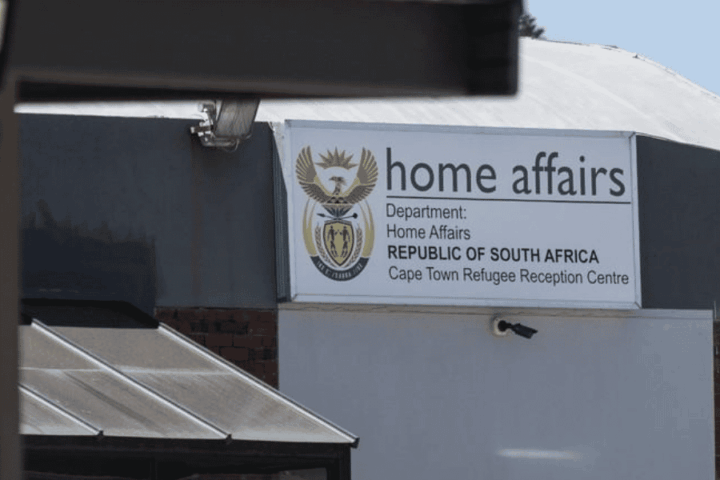
Home Affairs issued a directive on 28 September to implement the ruling. On Friday morning, the department announced that its director-general had withdrawn it.
The department said the directive had been issued without the knowledge of the minister or any other political office-bearer. It claimed reception offices had been overwhelmed within days, officials had been placed at risk and public safety had been threatened.
On Wednesday, the department also announced that it would refer what it described as a coordinated disinformation campaign about the judgment to the IEC.
Despite those explanations, MPs want the minister to account for the directive, its withdrawal and the department’s communication with the public as tensions escalated.