Government has announced a complete overhaul of South Africa’s electricity system, shifting focus from simply keeping the lights on to whether ordinary households can actually afford to switch them on.
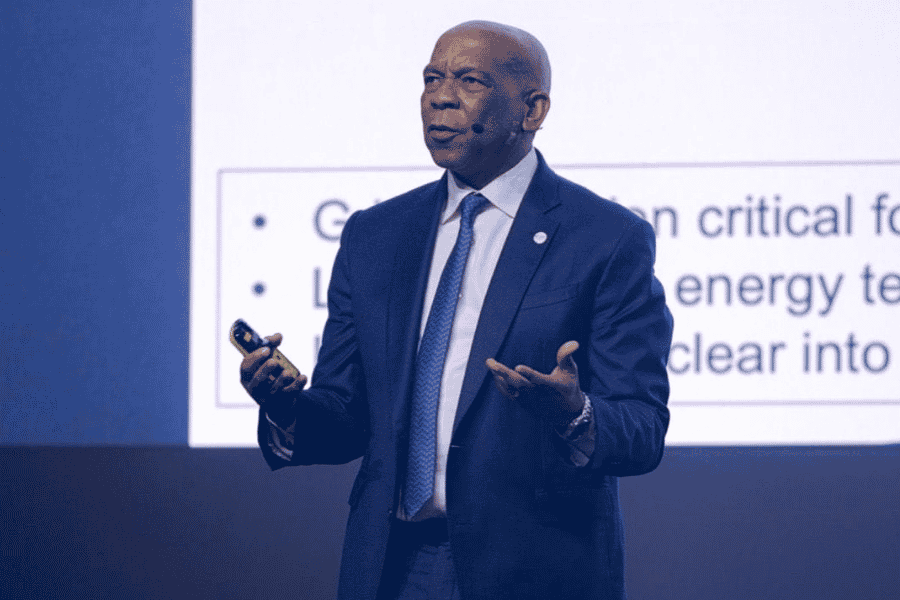
Electricity and Energy Minister Dr Kgosientsho Ramokgopa on Wednesday unveiled plans to fast-track 4,600MW of battery storage and 5,000MW of gas-to-power as part of a massive 9.6GW procurement programme that will reshape the grid between 2026 and 2037.
The plan, outlined at a media briefing in Hatfield, includes wind, solar, battery storage and gas-to-power under a new Section 34 determination. It also includes a State-led Power Parks Programme and an Independent Transmission Projects Programme to unlock new generation.
But Ramokgopa’s most candid admission was not about megawatts. It was about access.
“Electricity can be available on the grid, but in many instances, it’s not accessible. By that, I mean, people can’t afford the price of electricity,” he said.
“We are generating excess electricity, but their households now, as I speak to you, have no electricity, because they just can’t afford to buy the units.”
That distinction – between supply and access – is now at the heart of government’s next phase.
For two years, the political narrative has been that load-shedding is over. Government ended load reduction in seven of nine provinces, stabilised Eskom and brought new renewables online.
But in townships, informal settlements and rural villages, residents still live in darkness. Not because there is no power on the grid, but because they cannot afford units, are illegally connected to overloaded transformers, or are not formally connected at all.
“We want to resolve it, going forward,” Ramokgopa said, adding that communities had told government they are willing to pay if they are formally connected and billed properly.
The minister linked the crisis to collapsing local distribution: overloaded networks, illegal connections, informal settlements mushrooming faster than municipalities can plan, and transformers that cost around R500,000 each to replace.
“We accept that if you don’t roll out that programme, you are going to continue to have a situation where people don’t have access to electricity,” he said.
The overhaul therefore has two fronts which is fixing the high-voltage backbone and fixing the last-mile reality.
Government will procure the full 4,600MW of battery storage allocated under the 2025 Integrated Resource Plan, a figure Ramokgopa said cannot wait.
“We don’t wait for the future; the problem is now,” he said.
Currently the country has only a small amount of storage compared to what is planned, meaning solar and wind power generated during the day is often wasted.
“If you don’t address it now, we are likely going to revert back to a situation of crisis,” Ramokgopa warned.
The second front is transmission. South Africa cannot add 9.6GW of new generation if the grid cannot move it from the Northern Cape and Eastern Cape, where sun and wind are abundant, to Gauteng and KwaZulu-Natal where demand is highest.
Last week government announced it is moving ahead with the Independent Transmission Projects Programme to accelerate grid expansion. Without it, new generation will never reach households.
The third leg is the Power Parks Programme, where the state will prepare land, environmental approvals, studies and bulk services upfront so that emerging and smaller developers do not carry all the initial costs.
“The state will carry that responsibility,” Ramokgopa said.
The programme is designed to lower barriers to entry, broaden ownership and support local economic development, while government tries to reverse the perception that the energy transition only benefits large private players.
But the most politically sensitive issue remains price.
Ramokgopa said government is working on a new electricity pricing policy to deal with affordability, but he announced no new tariffs or immediate relief at Wednesday’s briefing.
NERSA-approved tariff increases have pushed units beyond the reach of millions, while municipalities add steep markups to fund their own operations.
The result is a two-tier system: stable supply for those who can pay, and load reduction, disconnections or illegal connections for those who cannot.