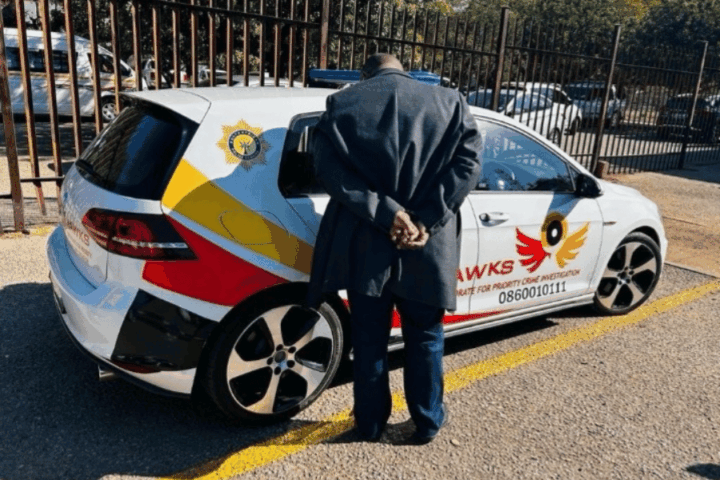
The trial-within-a-trial in the Matlala matter has now heard from a colonel, a warrant officer, an investigating officer and an independent civilian witness.
What has emerged over the past few sessions is more than a series of factual disputes.
A pattern is becoming clear in the State’s account of 17 April 2024, at almost every material point, it relies on recollection rather than records, even where records exist.
That distinction matters more here than it would in an ordinary trial, because of where the onus lies.
A trial-within-a-trial is a separate enquiry with its own onus and its own standard of proof.
It is a self-contained enquiry in which the State bears the burden of proving, beyond reasonable doubt, that the evidence it seeks to introduce was lawfully and voluntarily obtained.
The accused bears nothing. He need not prove mistreatment, procure witnesses or explain gaps. If the court is left in reasonable doubt about the circumstances in which the evidence was obtained, the evidence does not come in.
That allocation has a practical consequence that is easy to overlook. Where the party bearing the onus has access to a record capable of resolving a disputed fact, and does not place it before the court, the court is entitled to ask why.
A failure to produce evidence within a party’s control is not neutral. It is a matter a court may properly weigh, and it weighs most heavily against the party who carries the burden.
Against that background, consider what the court has been asked to accept without documentary support.
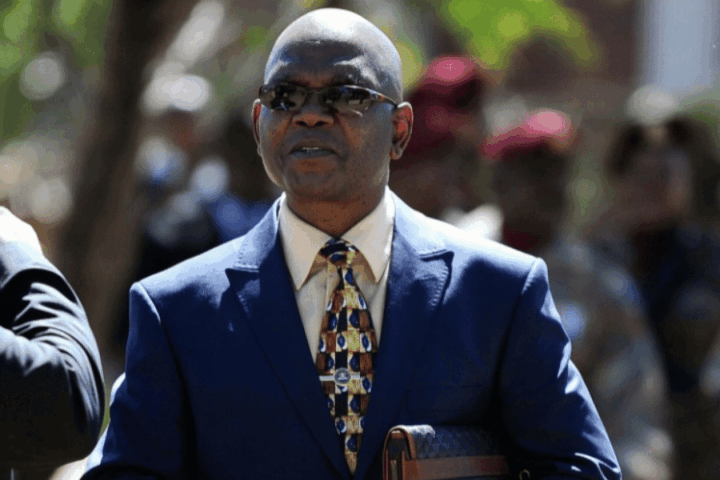
On the medical thread, a former Colonel, Owen King testified about Musa Kekana’s discharge from hospital, a conversation with a doctor whose name he does not know, and his own rejection of a proposed transfer.
When it was put to him that no document supported his account that the detainee had been discharged, the defence produced something else, an application for the detainee to be transferred to another facility.
No discharge record was placed before the court. The doctor has not been called.
On the entry into the premises at the arrest scene, the officers asked no permission and showed no warrant. The witness’s keys were taken from him while he lay handcuffed, and the gate was opened by police.
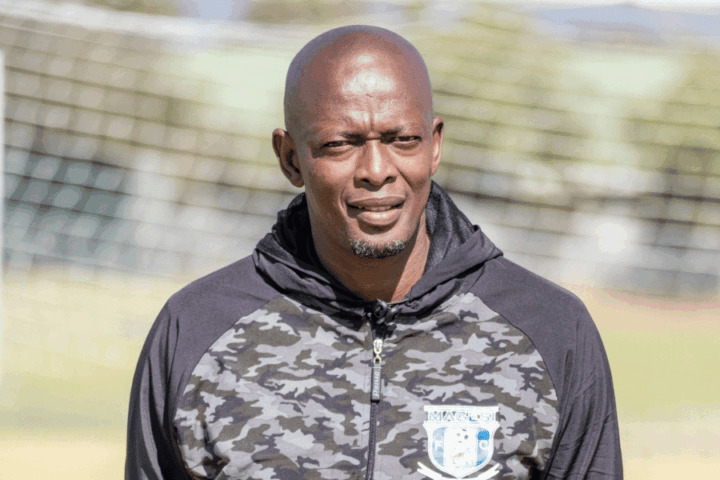
On the vehicles, warrant officer, Johannes Phiri conceded that he did not complete the vehicle logbook when he took an unmarked white Fortuner out on the morning of the operation.
He then told the court that the logbook would show that he was the driver of that vehicle on that day. Both propositions cannot stand. The document itself has not been produced.
The same officer confirmed that he made no contemporaneous statement in the matter. His made his statement on 9 September 2026, a day before he testified and nearly two and a half years after the events.
His explanation was that other officers were handling the paperwork and he did not wish to interfere.
The vehicle movement data is the one record that could establish where these vehicles went and when. The defence obtained it. The State did not lead it.
Put to Phiri, it was accepted as an accurate reflection of the movements it records.
The consequence of building a case on memory is already visible in the contradictions.
Three officers have given differing accounts of where the pre-operation briefing took place. They differ on which vehicles were present at the arrest scene, and on who drove them.
Phiri’s evidence that he drove an unmarked white Fortuner is squarely at odds with his commander,’s evidence that no such vehicle was there, and with the common ground that Fortuners had not yet been issued to the unit.
Captain Sekgobela’s account of who travelled in which vehicle from the briefing point is flatly denied by Phiri, an officer said to have been driving.
Asked to engage with his commander’s version, Phiri repeatedly declined to comment, and suggested his commander be recalled to clarify.
Counsel Riaan Gissing who represents, accused number one, Musa Kekana told the court he would argue that this amounted to a refusal to answer, and put it Phiri that both officers had misled the court.
Those are contentions, and the court will decide them.
But that they can be advanced at all follows from the same problem, where nothing was recorded at the time, there is nothing to hold the accounts against.
One witness, the State would need remains unavailable. A former member who has since resigned is said by police to be avoiding them. The officer who gave that evidence conceded under cross-examination that he has no address for the man, has never spoken to him, cannot confirm that a subpoena was served, and relied for the rest on what colleagues told him
A party seeking to proceed without a witness must ordinarily show reasonable efforts to secure attendance. On the evidence led, that showing has not yet been made.
None of this determines the outcome. The court may accept that the operation was lawfully conducted, that the contradictions are the ordinary product of imperfect memory two and a half years on and that the absence of documents reflects administrative failure rather than anything more.
But the enquiry is not about whether the officers are honest. It is about whether the State can discharge a burden it bears alone, to a standard that leaves no reasonable doubt, on the question of how the evidence it seeks to use was obtained.
On the material led so far, the answers to the central questions, who had custody of accused number one during the hours in which his condition is said to have changed, on what basis he left hospital, and on what authority a residence was entered do not come from documents. They come from recollection, and the recollections do not agree.
Whether that is enough is now a matter for the court.