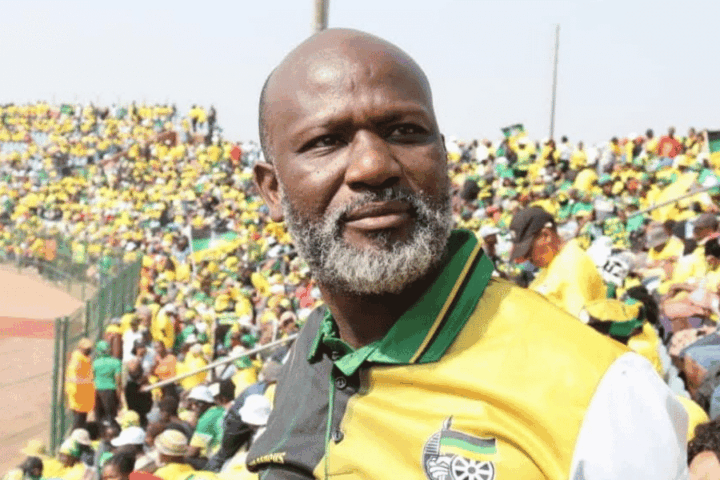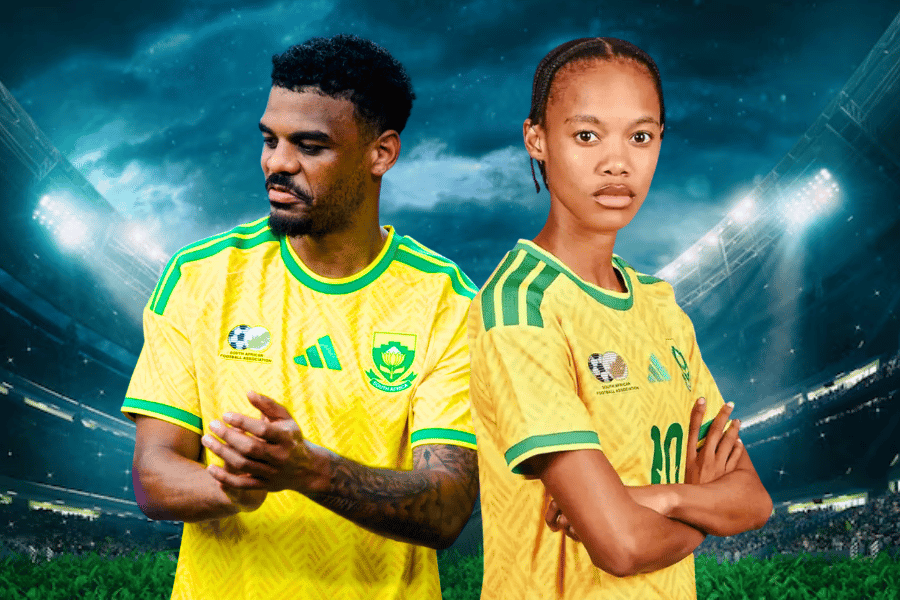
The disparity between the treatment of South Africa’s men’s and women’s national football teams came under the spotlight in Parliament after Gift Motaung, an MK Party member raised concerns that Banyana Banyana was not receiving the same level of support from the South African Football Association (SAFA) as Bafana Bafana.
The issue was raised on Tuesday, during a meeting of Parliament’s Portfolio Committee on Sport, Arts and Culture.
Motaung questioned the allocation of resources between the men’s and women’s national teams and requested that the committee be provided with the respective budgets.
Motaung said he wanted the committee to scrutinise how SAFA allocates its resources to Bafana Bafana and Banyana Banyana.
“I strongly believe that they are not getting the same treatment. We see it, it’s there, and I would like us as a Portfolio Committee to have a look at that and really understand in terms of how they choose to do their budgets and all of that stuff, why it’s that allocation and all of that stuff,” he said.
He asked whether the committee could be provided with both budgets to establish how funding and resources were being allocated between the men’s and women’s teams.
Minister of Sport, Arts and Culture Gayton McKenzie did not dispute the broader concern.
Instead, he made a striking admission.
“No, no, definitely, Honourable Nkosi, anybody that tells you that men and women are being treated the same is lying to you outright and disrespecting you. Women soccer is not being given the same attention by all of us that it should be given,” said Mckenzie.
The Minister recalled a visit to England which, he said, had left a lasting impression on him after witnessing the level of public support for women’s football.
“I was in England, and I’ll never forget what a great impact it had on me. We were in the UK on some government work, and it was the English team was playing the women’s team. And I couldn’t believe it. Every second person I passed was wearing a T-shirt of the women’s team. The stadium was sold out,” he continued.
McKenzie said the experience convinced him that South Africa needed to take women’s professional football more seriously.
“That has left a lasting impression that female soccer is big, but they treat women’s soccer as equally serious,” he said.
He also highlighted the economic realities facing many women footballers.
“Women are playing football, they have two babies or one baby. They still have a job. They still have a child. They still have a job that they have to work,” said McKenzie.
He argued that a professional footballer should be able to rely on the sport as a source of income.
“And I mean if you play professionally, you should. I think professionally is a right, that that’s what you do for an income,” he added.
The Minister then revealed that he had instructed departmental officials to explore a R100 million intervention to kick-start a proper women’s football league.
“I then said to the team and the CFO, we have to put aside 100 million rand to kickstart a proper league for women,” he said.
He said discussions had already begun with potential private-sector partners.
The proposal, however, was accompanied by a call from the committee for the Minister to provide a timeframe.
“I hold you to it, Minister, please, and give us the timeframe,” the committee member told McKenzie.
The parliamentary exchange comes against a backdrop of continuing questions about SAFA’s financial priorities and the treatment of women’s football.
While McKenzie acknowledged that women and men were not being treated equally in football, the committee has now sought access to the respective Bafana Bafana and Banyana Banyana budgets in order to examine how resources are allocated.