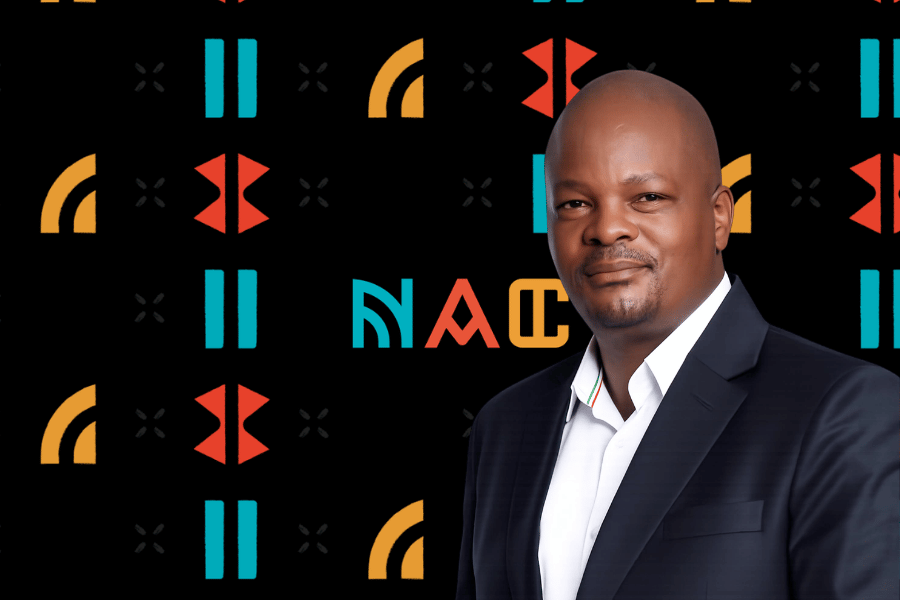
The National Arts Council (NAC) has been plunged into fresh leadership uncertainty after acting CEO Lebogang Magoera informed management that he will no longer perform the functions of the CEO following the reinstatement of the council by the Gauteng High Court.
In an email to NAC management, Magoera said uncertainty over his status as acting CEO had left him unable to continue exercising the functions of the position.
The development comes less than three weeks after the Gauteng High Court temporarily reinstated the NAC council following Sport, Arts and Culture Minister Gayton McKenzie’s decision to dissolve it.
Magoera was appointed acting CEO and designated accounting authority after the council was dissolved.
However, following the court’s reinstatement of the council, he says questions have now arisen over whether he can lawfully continue in the role.
“Until informed otherwise, I cannot continue with the execution of the functions of the CEO considering the uncertainty of the lawfulness of continuation of my acting and possible risks associated with that,” Magoera wrote.
He said he was aware of the potential impact of his decision on the operations of the entity but was equally aware of the risks he could expose himself to by continuing without clarity on his legal authority.
Magoera also informed NAC management that he would report for duty at the Department of Sport, Arts and Culture (DSAC) instead.
“Mr. Tsanyane, please note that I will effectively report at DSAC today, unless there is a clear and formal communication that advises me otherwise,” he wrote.
He said the uncertainty had already affected him psychologically.
“I already felt the negative psychological effect of this lack of clarity just in one day yesterday,” he wrote.
The email raises an immediate question about who is now responsible for the day-to-day administration of the NAC and who has authority to exercise the functions previously assigned to Magoera.
It also raises questions about the status of decisions that require executive or accounting authority while the position remains unresolved.
The uncertainty follows the 31 July judgment of the Gauteng High Court in Pretoria.
Judge A. Millar granted interim relief to former NAC council members who challenged McKenzie’s decision to dissolve the council.
The court suspended the dissolution and reinstated the former council pending the final determination of the review.
The Minister was also prohibited from taking further steps arising from the dissolution or appointing a replacement council while the interim order remains in force.
The judgment was not a final finding that McKenzie acted unlawfully.
The court nevertheless found that the statutory governance structure of the NAC could not simply be replaced by the CEO after the council was dissolved.
Judge Millar specifically rejected the argument that the CEO became the accounting authority in a manner that effectively replaced the council.
That finding now appears to have created a practical governance problem.
Magoera’s appointment as acting CEO and accounting authority arose from the Minister’s dissolution decision.
The court’s order suspended “ANY appointment, nomination, designation or other step already taken pursuant to the impugned dissolution decision”.
The precise effect of that paragraph on Magoera’s appointment now appears to be at the centre of the uncertainty.
The development also comes as the National Education, Health and Allied Workers’ Union (NEHAWU) has rejected the return of the council.
NEHAWU told Africa Daily that it respected the rule of law but did not believe the council should continue operating in its current form.
The union said that during the period in which Magoera was acting as CEO and accounting authority, the operations of the NAC had continued smoothly.
NEHAWU said the CEO should continue to manage the institution while the council should focus on oversight rather than interfering in day-to-day operations.
The union has also called for an independent forensic investigation into the NAC, including an investigation by the Special Investigating Unit.
Its position is that the council had already lost the confidence of staff and artists.
Magoera’s decision highlights a problem created by the collision between the Minister’s dissolution decision and the court’s interim order.
The Minister dissolved the council and subsequently appointed Magoera to act as CEO and accounting authority.
The court has now reinstated the council and suspended steps taken pursuant to the dissolution.
But the judgment does not expressly spell out, in practical terms, who should exercise the executive and accounting functions while the reinstated council resumes its statutory role.
That uncertainty now appears to have reached the NAC’s executive management.
Magoera has effectively asked for a formal and clear instruction before continuing to exercise the CEO’s functions.
Until that clarity is provided, the question is whether the NAC can continue making decisions requiring executive authority without exposing officials to legal or governance risks.
The NAC has unresolved issues involving its senior management, recruitment of permanent executives, labour relations and financial governance.
The latest development therefore creates a new question beyond whether the council should exist.
It is now a question of who is legally authorised to run the institution while the court order remains in force.
The Minister, the NAC council, DSAC and the acting CEO will need to provide clarity.
For now, Magoera has made his position clear, without formal confirmation of his authority, he does not believe he can safely continue performing the functions of the CEO.
The NAC may have its council back. But it now appears to have another governance problem on its hands.