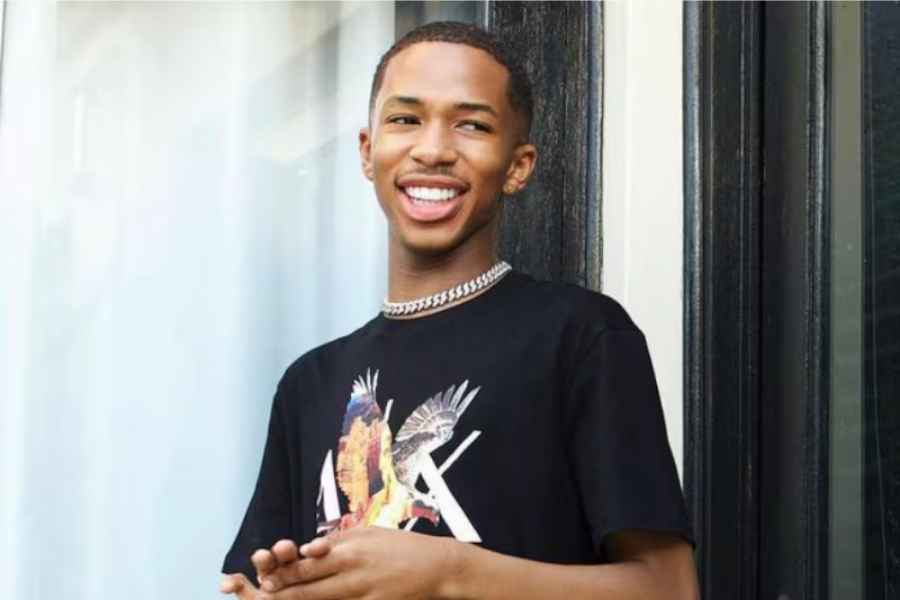
Lasizwe Dambuza is calling for a “Madlanga Commission” type of investigation into South Africa’s entertainment industry.
This follows a disastrous state of the South African Music Awards (SAMAs) and what he describes as the wider collapse of the country’s entertainment ecosystem.
The outspoken entertainer has put Sports, Arts and Culture Minister Gayton McKenzie on notice, calling for government, broadcasters, corporates, artists, producers and other industry players to confront what is going wrong in an industry with all the ingredients to compete globally.
He wrote: “Minister @GaytonMcK, we need to have a serious conversation about the state of South Africa’s arts and entertainment industry.
“What is happening? Our award shows are declining. The entertainment value is declining. Corporate investment seems to be disappearing.
“And yet South Africa has everything it needs to produce world-class entertainment! Haibo we have the talent, creatives, performers, producers, technical skills and technology.
“We were supposed to be building an industry capable of becoming Africa’s Hollywood and competing on the global stage.”
Lasizwe’s remarks come after another bruising chapter for the SAMAs, once regarded as one of the country’s biggest celebrations of music.
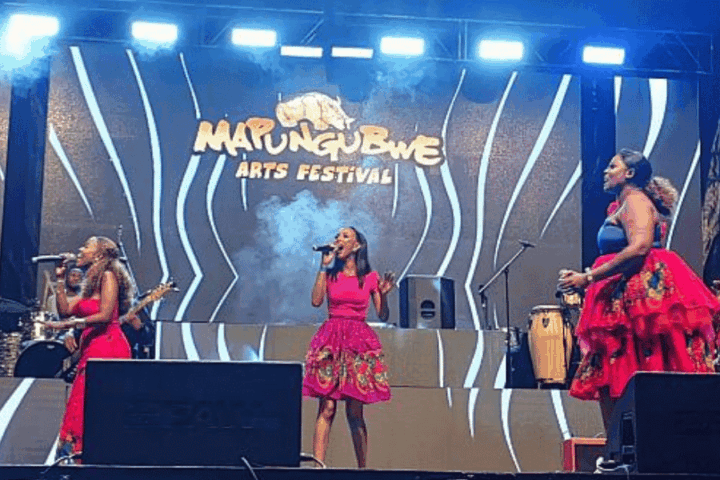
The 32nd edition was held on Saturday, 15 August at Sun City Superbowl. The event attracted criticism over its atmosphere, attendance and production.
Social media commentary described an underwhelming event, with complaints about technical problems, sound, hosting and a general lack of energy.
There were also questions about the absence of prominent artists and the broader level of industry engagement.
For an awards show whose purpose is to celebrate the country’s biggest musical stars, the apparent lack of enthusiasm from some of those stars was perhaps the most damaging indictment of all.
The crisis, however, did not begin with SAMA32.
In 2022, Zakes Bantwini delivered a devastating warning after finally receiving major recognition at the SAMAs following years of nominations.
Instead of simply celebrating, Bantwini confronted what he believed were problems undermining the credibility of the awards, raising concerns about judging, nepotism, bureaucracy, broken trust and what he saw as a lack of respect for artists.
He described the situation as a slap in the face and warned about the consequences of allowing mediocrity to become normalised.
Years later, his concerns remain relevant.
The questions he raised have followed the SAMAs into another awards cycle.
Despite the backlash surrounding SAMA31, the Recording Industry of South Africa (RiSA) proceeded with SAMA32.
Entries opened shortly after SAMA31, with submissions eventually closing on 6 February 2026 after the deadline was extended.
From RiSA’s perspective, the process represented continuity and an opportunity to build on the previous edition.
But for critics, the question was simple, Where was the accountability?
Where was the public review of what went wrong? Where was the transparent assessment of complaints? Where was the meaningful engagement with artists? Where was the explanation of how RiSA intended to restore trust?
Instead, the machine kept moving.
SAMA31 ended, SAMA32 began and the industry was expected to carry on.
But an awards show cannot survive on continuity alone. Its value rests on credibility.
Artists need to believe the process is fair. Fans need to believe the winners deserve recognition. Sponsors need confidence in the platform. Broadcasters need audiences to watch. And the public needs to believe the institution represents excellence rather than connections.
Once that trust begins to disappear, so does the cultural authority of the award.
Lasizwe’s question about money cannot simply be brushed aside. South Africa’s creative industries have spent years talking about funding, while artists complain about limited opportunities and creative businesses struggle to survive.
Productions are cancelled or scaled down, sponsors have become more selective, and government-funded institutions continue to face governance and accountability challenges.
Yet South Africa continues to promote the enormous economic potential of the creative sector.
If the creative economy is genuinely a strategic economic sector, where is the measurable investment?
Where are the sustainable jobs, export opportunities, world-class platforms and infrastructure?
And who ultimately benefits from the money entering the ecosystem?
One of the most revealing parts of Lasizwe’s statement is his question:
“Have corporates stopped believing in the industry?”
That question deserves an answer backed by evidence.
Corporate South Africa has historically played a significant role in entertainment through sponsorships, events, broadcasting partnerships and brand campaigns.
But audiences have fragmented across streaming platforms and social media, while companies increasingly demand measurable returns from their investments.
If corporate investment is declining, the industry needs to know why.
Is it the economy? Changing consumer behaviour? Poor governance? A failure to demonstrate value? Or has the industry failed to evolve?
Those questions cannot be answered with press releases. They require data.
The crisis is bigger than the SAMAs
Reducing this crisis to the SAMAs alone would be to miss the bigger picture.
South Africa’s entertainment ecosystem spans music, television, film, theatre, comedy, radio, digital creators, fashion and live events, supported by thousands of technical and creative workers.
Across these sectors, familiar problems persist, they include funding, governance, access, transformation, corporate investment, institutional accountability, weak infrastructure and limited international market access.
The country has repeatedly promised to turn its creative industries into a major economic engine.
Yet too many creatives still experience an industry where survival depends on connections, luck, unpaid labour and personal sacrifice.
That is not a sustainable creative economy.
Lasizwe’s reference to a “Madlanga Commission” is deliberately provocative.
But the underlying proposition deserves serious consideration. A comprehensive inquiry could examine the entire creative value chain.
How public funding is distributed, who receives it, what outcomes are produced, how contracts are awarded, how artists are selected, how awards are judged and what governance systems are in place.
It could also examine how much money enters the sector through sponsorships, where that money goes, what reaches actual creators and what role broadcasters play.
Most importantly, it could ask why so many creative workers remain unable to build sustainable careers despite South Africa’s enormous talent and global cultural influence.
These are not frivolous questions. They go to the heart of whether the country is serious about its creative economy.
Furthermore, South Africa has spent years describing itself as a potential entertainment powerhouse.
But becoming “Africa’s Hollywood” requires more than talent.
It requires infrastructure, financing, distribution, intellectual property protection, marketing, talent development and institutions capable of turning creative work into a sustainable global business.
South Africa has almost the ingredients.
What it lacks is a sufficiently integrated ecosystem capable of converting creative talent into long-term economic value.
That is why the country faces a paradox, South African artists can become globally successful while the domestic industry struggles to provide the infrastructure and investment needed to sustain that success at home.
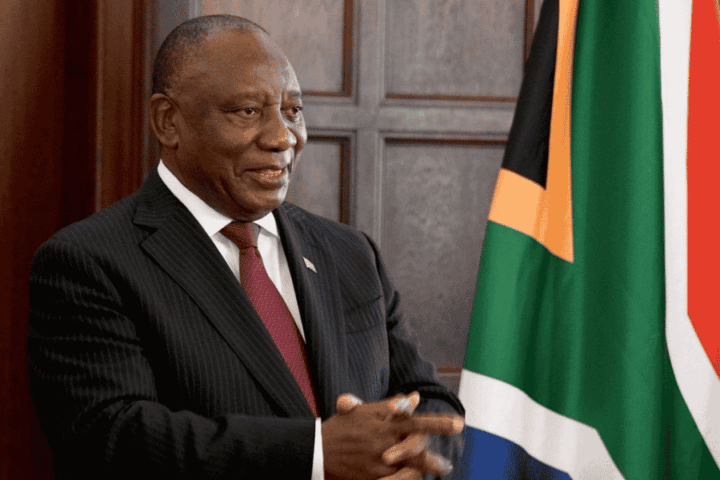
McKenzie now has a choice. Lasizwe has put the ball squarely in the minister’s court.
His call for government, broadcasters, corporates, artists, producers and creatives to come together may be the most important part of his intervention.
Government cannot fix the entertainment industry alone. Neither can RiSA, broadcasters or corporate sponsors.
And artists cannot be expected to rebuild an ecosystem while simultaneously struggling to survive inside it.
Someone, however, must convene the conversation.
McKenzie could dismiss the “Madlanga Commission” line as celebrity hyperbole.
Or he could recognise the frustration behind it and use it as the starting point for a serious industry-wide examination.
Because the question is no longer whether South Africa has talent. That argument has been settled.
The talent is here. The creativity is here. The technology is here. The audiences are here. The global appetite for South African culture is here.
What is missing is a system capable of matching that talent.
South African artists should not have to look overseas to find institutions that recognise their value.
And the country’s creative economy cannot remain a permanent promise of what it could become.
The time for speeches about Africa’s Hollywood is over.
The industry needs investment. It needs transparency. It needs credible institutions. It needs accountability. It needs artists at the table.
Zakes warned that the industry was heading in the wrong direction.
Lasizwe is effectively asking why nobody stopped it.
The question has moved from “Can the SAMAs be fixed?” to “What is wrong with the entire system?”
Perhaps that is exactly the question South Africa needs to ask.
Minister McKenzie, the microphone is yours.