The daughter of the founder of the International Pentecost Holiness Church(IPHC), Jaqueline Modise, has dropped a bombshell by claiming that Glayton Modise was not the biological son of her father, Frederick Modise.
As a result, she said Glayton’s three sons — Tshepiso Modise, Leonard Modise and Michael Sandlana — do not have the Modise family blood flowing in their veins and therefore cannot claim to be the rightful heirs to the church throne.
Jaqueline made the claims during a face-to-face interview with Africa Daily at her plot in Zuurbekom on Wednesday.
Jaqueline, who said she is the youngest of Frederick Modise’s six children, named her siblings as Dikeledi Modise, Tshoaro Modise, Irene Modise, Solomon Modise, Molefe Modise and herself.
“They were Dikeledi Modise, Tshoaro Modise, Irene Modise, Solomon Modise, Molefe Modise and me. Glayton was not my mother or my father’s biological child,” she said.
Jaqueline claimed Glayton was the child of Baby Sekano, who was her late mother Bertha’s sister.
“Glayton was a Sekano, not a Modise. This is known in the entire Modise family,” she said.
According to Jaqueline, Glayton lived with his mother in the North West after he was born and frequently visited the family at Zuurbekom, the headquarters of the IPHC, during holidays.
“During his visits, he would ask us who his father was and we did not want to entertain him,” she said.
Jaqueline said when Baby Sekano died, his family farmed him out to her parents to raise him.
She said some of her siblings, including Solomon, died before Frederick. She added that when Frederick became violently ill, the family expected Tshoaro’s son to take over leadership of the church.
However, Tshoaro’s son died around the same period as Frederick.
“It was then decided by the family together with the church council that Glayton should take over as the regent leader of the church for the sake of stability,” she said.
Jaqueline said when Frederick died, he left behind a will bequeathing his assets to her mother.
“All his assets were in his personal name because the IPHC was not a registered entity. The IPHC was only registered as an entity in 2005 after Frederick’s death,” she said.
Jaqueline said the family later appointed an executor to wind up Frederick’s estate.
“And that’s when the fights started. Glayton colluded with other church members and transferred my father’s assets into the name of the church,” she alleged.
She has now called on those claiming to be rightful heirs to the throne to undergo DNA tests to prove whether the Modise bloodline runs in their veins.
The church split into three factions after Glayton’s death in 2016.
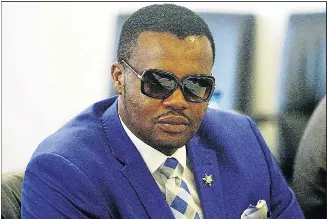
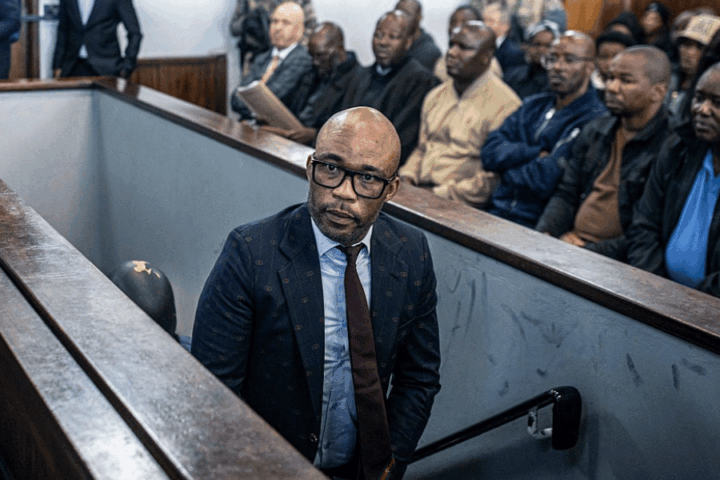
Tshepiso , who was expected to succeed his father, started his own branch in Springs after his brother Leonard and half-brother Sandlana opposed his ascendancy to the throne.
Leonard later established his own branch called Silo, which operates at the IPHC headquarters in Zuurbekom, while Sandlana founded another branch called Jerusalem in Heidelberg.
This came after Leonard and Sandlana both claimed they were the legitimate successors to lead the church following Glayton’s death.
Jaqueline said it was time for the family to gather and undergo paternity tests to determine who genuinely carries the Modise bloodline.
Consequently, she has decided to establish a verified family lineage structure, referred to as a “kinship” family tree.
She said the process would include voluntary DNA testing for individuals claiming membership of the Modise family lineage.
According to Jaqueline, the purpose of the family tree is to provide clarity on matters of heritage, assist in resolving competing claims and support the lawful finalisation of the estate, which remains unresolved.
“We don’t want to subpoena or summon people through a legal process. We want to do the tests peacefully because we are people of peace. The tests should be done here in Zuurbekom so that we can end these fights,” she said.
She added that the family remains concerned about the dispute between Leonard and Sandlana, particularly regarding the occupation and control of IPHC-linked properties.
Jaqueline emphasised that all disputes should be resolved through lawful, transparent and peaceful means, with respect for legal processes and the rights of all affected parties.
She further said the family remained committed to pursuing a fair and credible resolution that honours the legacy of the founder, protects the integrity of the church and promotes unity among congregants.
The church, founded in 1962, has played a significant role in the spiritual and social lives of many South Africans and people across the region. However, following the deaths of Frederick Modise in 1998 and Glayton in 2016, the church has been plagued by ongoing leadership disputes.
Africa Daily sent written questions to both Tshepiso and Leonard Modise.
Tshepiso said he does not want to get involved in politics and , disputes, or public controversy surrounding ecclesiastical leadership and family allegations.
“My focus remains on serving God, uplifting communities through faith, and walking the path that I believe he has called me to follow. I therefore choose not to engage in matters that may create further division or conflict,” he said.
He further said he will leave the final adjudication to the authorities appointed with the matter.
“I trust that those responsible for such matters will address them through the appropriate channels and processes,” he said.