
A Rumour That Won’t Go Away
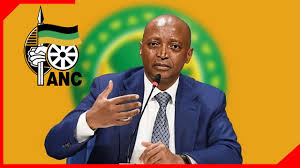
In South Africa’s fluid political landscape, few rumours have generated as much quiet intrigue as the suggestion that billionaire businessman Patrice Motsepe could one day seek the presidency of the African National Congress (ANC). Motsepe has never publicly declared such an ambition, and those close to him have often dismissed the idea as speculative. Yet the persistence of the conversation itself speaks to his unusual positioning at the intersection of wealth, influence, and proximity to political power. As the ANC continues to grapple with questions of renewal, leadership succession, and electoral decline, Motsepe’s name periodically surfaces as a symbol of both possibility and controversy.
A Business Titan with Global Reach
Patrice Motsepe is best known as the founder and executive chairman of African Rainbow Minerals (ARM), one of South Africa’s leading diversified mining companies with interests in platinum, iron ore, manganese, coal, and copper. Emerging in the early post-apartheid era, Motsepe became the country’s first Black billionaire, a milestone that cemented his status as a symbol of Black economic empowerment.
Beyond ARM, Motsepe’s business interests extend into finance, sports, and energy, while his tenure as president of the Confederation of African Football (CAF) has given him a continental profile uncommon among South African business leaders. Supporters point to his reputation as a consensus-builder and administrator, particularly within CAF, where he has promoted governance reforms and financial stability. Critics, however, argue that his corporate background reflects elite continuity rather than transformative economic change.
Potential Support and Resistance
Motsepe’s potential support base would likely include segments of the business community, moderate ANC leaders, and those prioritising economic recovery and institutional reform. His international stature could appeal to constituencies concerned about South Africa’s global standing.
Conversely, resistance would likely come from grassroots activists wary of elite dominance, as well as leaders who have spent decades building influence within party structures. There are also broader public concerns about the blurring of lines between wealth and political power, particularly in a society marked by deep inequality.
Conclusion: Ambition or Projection?
Whether Patrice Motsepe harbours any ambition to lead the ANC remains unproven. For now, the idea functions more as a projection of South Africa’s political anxieties than as a concrete political project. It reflects a party searching for renewal, a public grappling with disillusionment, and an economy in need of confidence.
Motsepe’s prominence ensures that his name will continue to surface in these debates. But translating speculation into political reality would require not only personal willingness, but also navigation of one of the most complex internal political machines in the country. Until then, the question of Motsepe and the ANC presidency remains less a plan than a possibility—revealing as much about the state of the ANC as it does about the man himself.