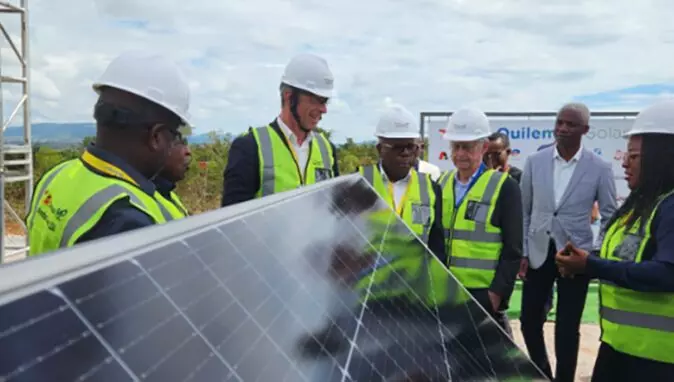
This project is the first implementation of Angola’s rural electrification project, which is essentially a government-led initiative to install autonomous solar-battery mini-grids in off-grid communities. It is funded by a combination of international support, including Standard Chartered and German export credit guarantees.
The competition for off-grid solar-plus-storage systems has grown. In some areas, off-grid solar capital prices dropped by 20% between 2020 and 2024, and this trend is expected to continue, according to a 2025 assessment by Beyond the Grid.
A 35 MW solar park near Lubango—described as the largest privately owned solar facility currently under construction in Angola—is expected to begin operations in mid-2026 after breaking ground in May 2025. The project marks a significant milestone in the country’s rapidly expanding renewable energy landscape.
At the same time, two large grid-connected photovoltaic (PV) installations in the Huíla and Cunene provinces are set to add a combined 285 MW of capacity early this year. Together, these projects will substantially boost Angola’s solar output and strengthen the national grid’s resilience.
Beyond utility-scale developments, projects such as the Cazombo solar initiative are delivering immediate local benefits by replacing diesel-powered mini-grids. This shift directly reduces fuel consumption, lowers carbon emissions, and improves air quality in remote communities—supporting Angola’s broader climate mitigation and energy access commitments..