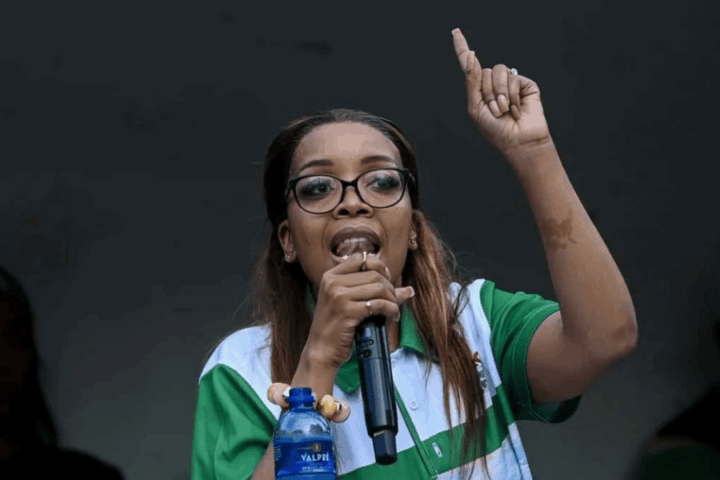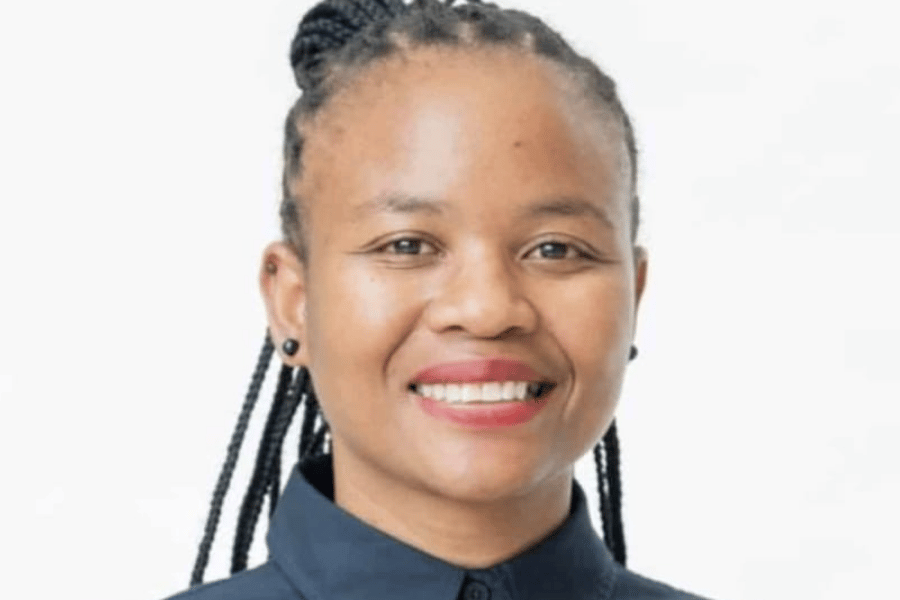
Executive Mayor Dr Nasiphi Moya says she wants to keep the mayoral chain after the November 4 local government elections to finish the job of rebuilding the capital, warning that a new administration would waste time questioning decisions and demoralising officials who have finally found momentum.
Speaking on a podcast this week, Moya – who is about to finish two years without facing a motion of no confidence – said she would be “jealous” if someone else took over now when the city has just stabilised.
“There is so much work to be done in the City of Tshwane, and I’ll be jealous if I’m not the one who’s continuing with it, because I already understand. I don’t have to start from scratch,” she said.
Moya, who describes herself as a bureaucrat and not a politician, came from nowhere in October 2024 to lead a fragile coalition of 10 political parties that critics had branded a “doomsday coalition”.
Tshwane had seen six mayors in 10 years since 2016. She is the first to leave office without being booted out.
“People didn’t even know who I was. So I just came out of nowhere and there was a lot of negativity and low expectations. Others even called us a doomsday coalition, and the attacks on me personally,” she said.
“The start was not positive… residents of Tshwane didn’t believe in politicians anymore, or even that the municipality can do things for them.”
Her pitch for a second term is built on what she calls the restoration of basic disciplines.
The major crisis, she said, was financial. When she took over, Tshwane had four consecutive unfunded budgets with an average deficit of R4.6-billion per year.
“In February 2025, we then reduced that R4.6 billion deficit to a R1.3 billion deficit. Three months later, we tabled the funded budget, the first one in four years,” Moya said.
The city is now implementing its second funded budget.
Creditors stood at R13-billion, with R6.7-billion owed to Eskom alone, plus a SARS debt.
Eskom was on its way to court to attach the municipality’s bank account.
“We’ve now paid over R2.5 billion on that Eskom debt, and we’ve settled the debt with SARS,” she said.
On expenditure, she imposed austerity on non-core items: no catering, no travel budget.
“If you want to travel, someone must pay for you. If they want you, they must pay for you… we were introducing a culture that if we don’t get to that discipline of spending on the core basic services… the officials would not have understood.”
She also settled a crippling labour dispute. Officials had gone without increases for two financial years and downed tools for three months from September to December 2023, vandalising property.
“We had to renegotiate… We managed to sign an agreement where we’ve settled one year… We have the most motivated officials,” she said.
Tools of trade and fleet were restored – from PPE to emergency services vehicles, cherry pickers, jet patchers and road-marking equipment bought cash.
Infrastructure spending, which had collapsed from over R4-billion when she was an official between 2016-2020 to just R2-billion when she returned in January 2024 as deputy mayor, has been lifted to R2.8-billion. But she admits it is far from enough.
Tshwane’s total budget is R58-billion compared to Johannesburg’s R89-billion and Ekurhuleni’s R77-billion, despite similar size.
“The 10-year demand was R58 billion. The first year we put R2.2 billion. This year is R2.8 billion. You see how far we are,” she said.
Her biggest regret is not moving faster on alternative infrastructure funding.
“Anyone who’s going to take that seat cannot do without working on closing that funding gap,” she said.
If given a second term, Moya says she will shift from stabilisation to big economic projects – availing city assets to the private sector on long-term operate-and-transfer models, including the fresh produce market to support agriculture and agro-processing, with guarantees on energy and water security.
“Those things, we haven’t done them. We’ve planned for them, but we haven’t done them,” she conceded.
She wants to prepare Tshwane for rapid urbanisation, with projections that 90% of the population will move to urban centres by 2050, by fixing ailing infrastructure – 54% of transformers are 40 years and older – tackling illegal connections that have become an “economy” involving officials, and formalising 502 informal settlements.
Moya, who is currently on an 8% mandate with 19 PR seats and is gunning for a majority, says she is exhausted and her leg has been painful after 24 months without leave, managing coalition meetings daily and chairing a 7:30am Friday war room with 24 departments.
“I would need two weeks’ leave beforehand,” she joked, but added: “If I were to be given the opportunity, I would grab it.”