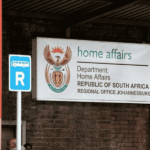
The Refugee Appeals Authority of South Africa (RASA) is still sitting with 161,000 asylum appeals, even after dozens of advocates signed up to help clear them.
RASA chairperson Zilpha Raphesu told Parliament’s Portfolio Committee on Home Affairs last week that the advocates only work part-time.
“I must highlight that the advocates are there, but they are assisting us part-time. As they are going on with their cases or business, when they are available, they do come in to assist us. So over and above, we will need warm bodies that will be full-time, sitting with us to assist us with the backlog,” Raphesu said.
She said the backlog has grown since the authority started a clean-up project with the UN refugee agency.
“When we started the backlog project, partnering with the UNHCR, we ring-fenced the appeal caseload in October 2021, and the backlog that we had to deal with was in an amount of 133,000. In 2026, we are sitting with 161,000 cases,” Raphesu explained.
She said that the Constitutional Court’s Scalabrini ruling will push the number higher. “With the implementation of the Scalabrini case, our cases are going to increase,” she said.
Raphesu said that RASA started recruiting advocates in Pretoria as a test case. The advocates came from the Pretoria Bar, the Black Advocates Forum (BABASA) and the Tshwane Society of Advocates.
“90 advocates raised their hands to come and assist the authority with the eradication of the backlog. Of the 90, 43 were trained and they were ultimately appointed by the Minister.
“We proceeded to the Western Cape. 35 advocates from the Cape Bar raised their hands. We have trained them. We are on the verge of appointing them. The Minister will sign their appointments any time from now,” Raphesu said.
She said she is talking to the Polokwane Bar about the Musina caseload, with plans to roll the project out countrywide. Justice Minister Mmamoloko Kubayi has also offered pro bono lawyers.
“She will engage with the Minister of Home Affairs on that offer,” she said.
Raphesu said RASA needs enough full-time adjudicators to keep up with the department’s 96 refugee status determination officers.
“We need capacity to match that of the RSDOs, so that whatever they are putting out as decisions that are unfounded are met at least with full-time adjudicators from RASA,” she said.
Home Affairs Director-General Thommy Makhode called the volunteers “the good news”.
“We have also received support from a number of law firms, I think about 90 lawyers, that have stepped up to come and assist in this specific area to work with RASA, including the Department of Justice, to deal with the backlogs,” he said.
But Makhode said National Treasury has not funded the department’s request for more immigration staff.
“The second business case that Treasury has not yet funded deals with issues around immigration. Treasury is aware of the gaps that are there in the asylum seeker space, to the extent that we are also relying on partnerships with the UNHCR,” said Makhode.
In July, Home Affairs said RASA had appointed 40 additional advocate members and cut its ring-fenced backlog of 133,582 appeals by 19,064 cases in the 2025/26 financial year. Minister Leon Schreiber called it “the biggest reduction in the refugee appeals backlog in years”.
RASA told the committee in May that 90,024 of its appeals were inactive, with the appellants’ whereabouts unknown, and 70,976 were active.