Home Affairs rejected a Congolese man’s asylum application without properly investigating his nine year history in his father’s asylum process, the Johannesburg High Court has found.
The department then relied in court on legal provisions that were not yet in force when the application was rejected.
In a judgment handed down on 6 October, Acting Judge HP van Nieuwenhuizen set aside both the original rejection and the decision confirming it, ordering Home Affairs to reconsider the application from scratch.
“Adulthood may be relevant to dependency. It is not a substitute for establishing the prior position,” the judge said.
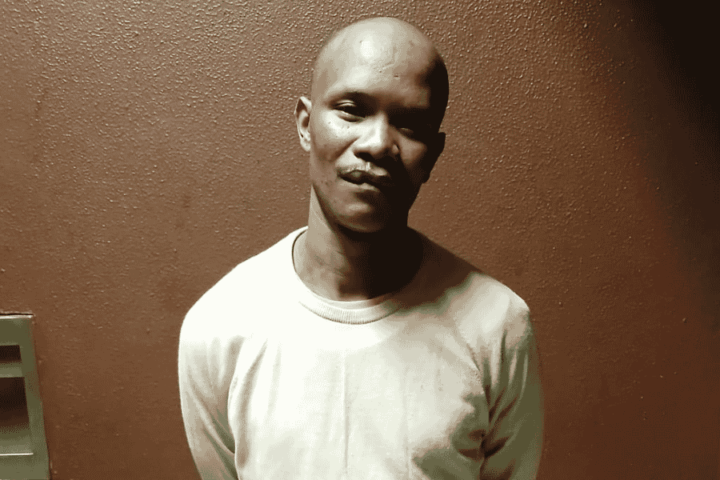
Ilunga Nyoka Amede Mulongo was born in Lubumbashi in the Democratic Republic of Congo on 24 March 1994. According to his founding affidavit, he arrived in South Africa on 8 February 2010, aged 15, with two of his sisters after arrangements made by his father.
Mulongo said his father was a clergyman who had faced persecution in the DRC. He maintained that he had been included in his father’s asylum process and that his temporary permits were renewed over the following years.
He completed matric in 2014 and later began studying, but could not finish because he lacked money. He subsequently found employment.
In October 2019, when Mulongo was 25, his permit was endorsed with an instruction to delink from his father’s file. The endorsement referred to his age and his father’s presence in the DRC.
His independent application was captured on 26 November 2019.
On 2 December, Refugee Status Determination Officer Dean Ragimana interviewed him and rejected the application as “manifestly unfounded”.
The reasons included Mulongo’s age, his father’s return to the DRC and the absence of evidence that Mulongo had personally suffered persecution.
But the court found that the officer had not adequately investigated what had happened to the father’s asylum process or what the termination of Mulongo’s previous status meant for his own application.
The judge acknowledged that the officer had asked questions about the father, including his whereabouts and temporary permit. The problem was not a complete absence of enquiry, but that the information gathered was not properly evaluated.
“Those matters required evaluation rather than assumption,” the judge said.
The Standing Committee for Refugee Affairs subsequently confirmed the rejection. But the judge found that its decision substantially repeated the original reasoning without addressing the gaps in the investigation.
“SCRA did not cure the defect,” the judge said.
The court also examined Home Affairs’ argument that Mulongo had failed to provide his father’s file reference and supporting documents when he applied.
The judge accepted that an asylum seeker has a responsibility to provide information supporting a claim. But the department’s own records showed that Mulongo had previously been dealt with through his father’s asylum process.
The officer could have requested further documents, explained why they were needed and given Mulongo an opportunity to produce them.
The judge found that the department had not adequately investigated the known history before treating the matter as a fresh claim based on personal exposure to persecution.
A further problem emerged in Home Affairs’ legal defence.
The department relied on section 21B(3A) of the Refugees Act and regulation 11, which deal with asylum seekers who cease to be dependants and must apply independently.
Those provisions came into force on 1 January 2020, a month after Mulongo’s application had been rejected.
The judge said the later provisions could not retrospectively provide the legal basis for a process completed in December 2019.
However, the ruling does not mean that an adult previously included in a parent’s asylum process can never be required to apply independently.
The judge said that question had to be assessed under the law applicable at the time and against the person’s properly established circumstances.
The court was also careful not to decide whether Mulongo qualified for refugee status.
The documents he produced did not establish that his father had been formally recognised as a refugee. Nor did the court find that Mulongo was entitled to derivative refugee status through his father.
Instead, the judge ruled that the application had been rejected without the investigation and evaluation required by law.
The matter has been sent back to the appropriate Refugee Reception Office for a fresh determination by a different refugee status determination officer.
The court made no finding of personal misconduct against Ragimana and did not direct Home Affairs to grant Mulongo asylum.
The Minister of Home Affairs was ordered to pay Mulongo’s legal costs on the ordinary party-and-party scale, with counsel’s fees for work performed from 12 April 2024 to be taxed on scale B.