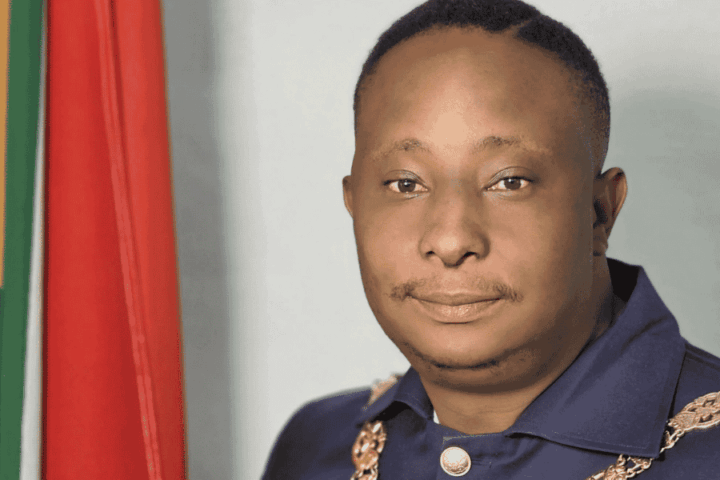
Attorney Winston Marcus Kgaudi Matlala has lost a court battle to reclaim shares in a Vunani group company that were transferred to Vunani Capital after he failed to repay a R1.36 million loan.
In a judgment handed down on Tuesday, 13 October Johannesburg High Court Judge Leicester Adams dismissed Matlala’s application to reverse the transfer of his 10.714% shareholding in Mandlamart, finding that the shares had been attached and transferred through a lawful execution process.
The judge also rejected Matlala’s allegations that Vunani directors had breached their fiduciary and statutory duties, finding no evidence to support the serious accusations.
“It is a strong and a serious allegation to make against any director of any company that a person has breached those duties,” Adams said.
The dispute dates back to 2015, when Matlala entered into an agreement with Vunani Capital to acquire 10,714 shares in Mandlamart, representing 10.714% of its issued share capital.
The transaction also included a portion of Vunani Capital’s loan account in Mandlamart. The combined purchase price was R4,758,381.
Matlala paid R1.586 million in cash, while Vunani Capital financed the remaining R3.172 million through a vendor loan.
Under the agreement, the loan was repayable within five years from dividends declared by Mandlamart. Matlala also pledged his shares to Vunani Capital as security for his obligations.
But the dispute that ultimately cost him the shares arose from a separate loan.
In June 2014, Vunani Capital had lent Matlala R900,000 to help him buy property. He failed to repay the loan when it became due.
By March 2018, the outstanding amount, including interest, had risen to R1,363,076.90. Matlala acknowledged the debt in writing, and Vunani Capital subsequently obtained a default judgment against him on 1 November 2018.
In April 2019, the company obtained a warrant of execution and had Matlala’s Mandlamart shares attached.
The shares were eventually transferred to Vunani Capital, which argued that the process was lawful and that Matlala had ceased to be a shareholder.
Matlala challenged the transfer, arguing that the company had resorted to unlawful self-help.
He asked the court to set aside the transfer and restore his shareholding.
The judge accepted the respondents’ explanation that the shares could not be sold at a public auction because Mandlamart was a private company subject to restrictions on the public offering and transferability of its securities under the Companies Act.
“The execution process followed by Vunani Capital” was lawful, Adams found, adding that the company most certainly did not make itself guilty of self-help.
The court also considered the value of the shares when they were attached.
Mandlamart had appointed an independent valuator, whose assessment put their value R756,761 above the judgment debt.
Vunani Capital tendered the surplus to Matlala after taking transfer of the shares.
The judgment records that the valuation also accounted for the outstanding amount under the separate vendor loan used to finance Matlala’s 2015 share purchase.
The court noted that there was no outstanding amount under that loan agreement.
Matlala’s application extended beyond the Mandlamart shareholding. He alleged that he also held a beneficial interest in Mandlalux and Fairheads Benefit Services, two companies in the Vunani group.
He sought financial records from the companies and challenged transactions involving management fees, alleging that a transaction between Mandlalux and Fairheads was simulated.
He also wanted KPMG Services, the auditor of some of the companies, to restate Vunani’s 2020 financial statements and sought findings that the group’s directors had acted dishonestly and breached their duties.
The court found that Matlala had never been a shareholder of Mandlalux or Fairheads.
Adams said the 2015 sale agreement covered shares in Mandlamart, not the other two companies.
Although its preamble referred to Matlala effectively becoming the beneficial owner of 7.5% of Mandlalux, the judge found that this did not amount to the sale and transfer of shares in Mandlalux or Fairheads.
The judge also found that Matlala had not provided sufficient evidence to support his allegations against the directors.
The litigation had become increasingly acrimonious over several years. According to the judgment, Matlala laid criminal charges against the companies and their officials.
On 4 March 2021, Vunani Capital and Mandlamart obtained an interdict preventing him from harassing or contacting their directors, shareholders and employees, except through the companies’ attorneys.
Despite dismissing Matlala’s application, the court rejected a separate attempt by the respondents to have portions of his founding affidavits struck out as scandalous, vexatious, irrelevant or inadmissible.
Adams found that the respondents had failed to establish grounds for striking out the disputed material.
Matlala was ordered to pay the legal costs of Vunani Capital and the other respondents involved in opposing his application, including the costs of two counsel, on scale C.
The respondents were separately ordered to pay Matlala’s costs of the unsuccessful strike-out application, including senior counsel’s costs where applicable.