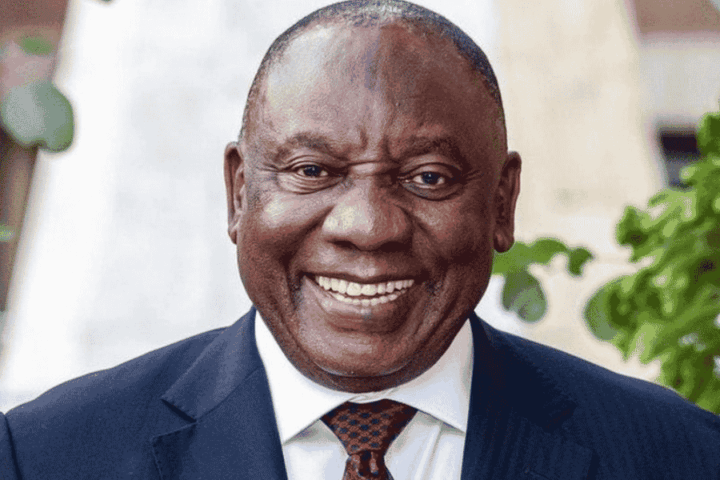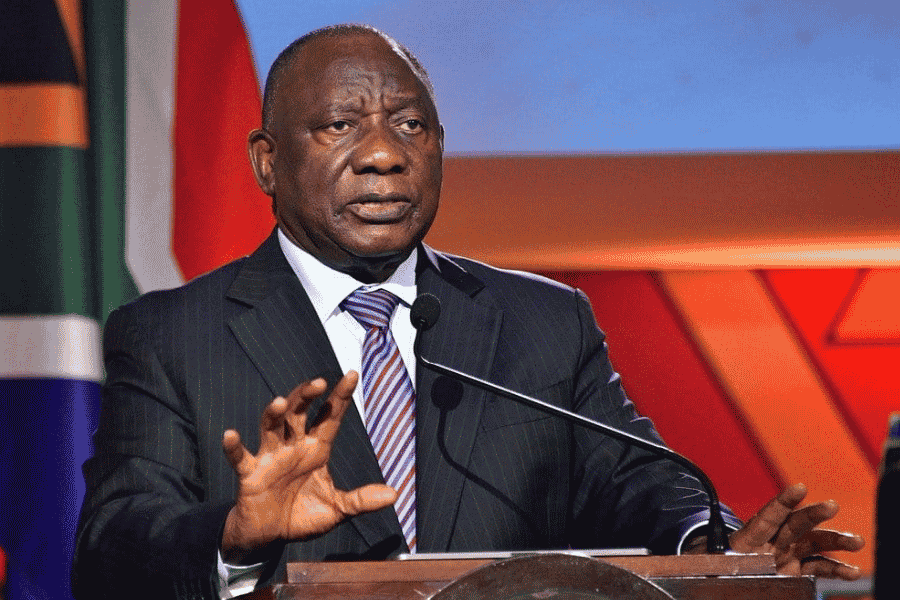
Seven years after he first declared gender-based violence a national crisis, President Cyril Ramaphosa went to war against it on Tuesday night — admitting his government has failed to stop women from being hunted and killed.
Ramaphosa was addressing the nation on Tuesday night.
“I address you tonight with the heaviest of hearts,” Ramaphosa said. “The violence inflicted upon the women of South Africa is a source of profound pain and national shame.”
Speaking as the country reels from the discovery of 11 women’s bodies in Ekurhuleni since July, Ramaphosa said the nation is angry – and that anger is justified.
“The nation is angry. The women of South Africa are angry. Their anger is justified. I share that anger. I share the grief at lives so cruelly and senselessly cut short.”
He named them. Busisiwe Mahlangu. Itumeleng Kekana. Nomfesane Mjobo. Gracious Nkomo. Elizabeth Moselakgomo. Dineo Motapane. Jabulile Ntimba. Ntombifuthi Nxumalo – the latest, found in Springs on Sunday.
Beyond Ekurhuleni, he listed ten-year-old Octavia Swarts from Kraaifontein, Nomakhwezi Zitha from Delft, Taymin Platt from Eersterust, 73-year-old Mariette Mouton from Bredasdorp, Christina Nyalungu, a security officer at the University of Limpopo, 15-year-old Amogelang Motshwaedi from Dinokana, and Amanda Kosani from Port Alfred, killed on Women’s Day.
“There are women lying tonight in government mortuaries waiting to be identified, waiting for someone to claim them, waiting to be taken home and laid to rest. How can our hearts not be broken? How can we not be angry?”
In his most candid moment, Ramaphosa confronted his own government’s failure.
“What weighs on me most is that seven years ago, in this same month, I stood before the nation to speak about this same crisis. Yet here we are, once more having to confront the terrible reality,” he said.
“We must confront an uncomfortable truth. What we have done has not been enough. We need to do much more. It has not been enough to prevent women from being killed. It has not been enough to make women safe.”
Ramaphosa said the Ekurhuleni killings have been elevated to national level under the Deputy National Commissioner for Detective Services, with a multidisciplinary team of detectives, Crime Intelligence, forensic specialists, investigative psychologists and digital investigators.
The CSIR is assisting with digital forensics.
He confirmed arrests have already been made: a suspect arrested on Sunday morning for the killing of Ntombifuthi Nxumalo, two suspects in court for the murder of Jabulile Ntimba, and a suspect in custody for Busisiwe Mahlangu.
In other cases, police have identified persons of interest and collected DNA, blood samples, clothing and cellphones.
“At present, the police have not found evidence establishing that these killings were committed by a single perpetrator. All possibilities remain under investigation,” he said, warning the public not to wait 24 hours to report a missing person. “Only two of the women found dead in Ekurhuleni had been reported missing.”
Ramaphosa announced four emergency directives with hard deadlines:
First, a national case-recovery operation. The Ministers of Police and Justice, working with SAPS and the NPA, must within 60 days audit all unresolved murders, attempted murders, rapes and serious sexual offences against women and children – including how old the cases are, which are awaiting forensics, and where suspects have been identified but not arrested. Within 90 days, recovery plans with a responsible official and deadline must be in place for priority cases.
Second, a forensic backlog plan. Within 60 days, police and forensic authorities must present a funded plan to reduce backlogs and set clear turnaround times. Priority GBVF samples must be ring-fenced. Progress must be reported publicly every quarter.
Third, women’s safety audits in every municipality. Within 60 days, municipalities must identify broken streetlights, overgrown spaces, abandoned buildings, unsafe transport routes and parks that place women at risk. Within 90 days of the audit, the most urgent hazards must be fixed or put in a funded plan. Audits and progress will be published. He also ordered intensified enforcement against unlicensed liquor outlets.
Fourth, a coordinated package on alcohol-related violence. Within 60 days, the Minister of Trade, Industry and Competition, with Health, Social Development, Police and COGTA, must submit to Cabinet legislative and enforcement proposals.
“Alcohol does not cause gender-based violence and it can never excuse it. Responsibility always lies with the perpetrator,” Ramaphosa said. “But harmful alcohol use is a significant aggravating factor.”
All measures will be monitored by the Inter-Ministerial Committee and the newly operational National Council on Gender-Based Violence and Femicide, with a first consolidated public report within 90 days and quarterly thereafter.
“These directives are not just a statement of good intentions. They establish responsibilities, deadlines and a duty to submit reports on a regular basis to the nation,” he said.
He ended with a direct challenge to men:
“For too long, gender-based violence has been treated as a women’s problem to solve. We have placed the burden of male violence on women. That must change. It is time for good men to stop being silent men.”
“Seven years from now, no President should have to stand before this nation and say these same words again,” Ramaphosa concluded.