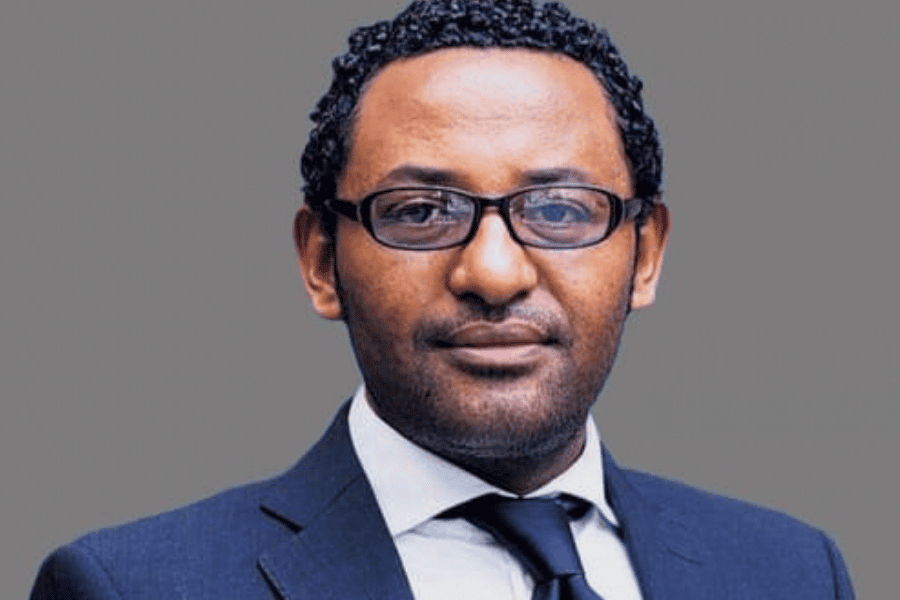
The African human rights commissioner who publicly condemned vigilante attacks on foreign nationals in South Africa this year is now leading a continental delegation through the country.
Commissioner Solomon Ayele Dersso heads a four-member delegation from the African Commission on Human and Peoples’ Rights.
It began a five-day Promotion Mission on Monday.
Dersso is the Commission’s rapporteur on the human rights situation in South Africa.
In April, the Commission issued a statement through Dersso expressing grave concern about xenophobic violence and intimidation against nationals of other African countries in South Africa.
It said it was particularly alarmed by reports of vigilante groups assaulting and harassing people they believed to be undocumented migrants.
The statement said only authorised state institutions may enforce immigration law.
It said “any form of vigilante justice or mob action constitutes a violation of the rule of law”.
Dersso is now in the country as a second deadline set by the anti-immigration movement March and March approaches.
The group has told undocumented foreign nationals to leave South Africa by Wednesday, September 30. That date falls in the middle of the mission.
The delegation arrived on Sunday. The mission runs until October 2.
It is the Commission’s first Promotion Mission to South Africa since September 2018. Before that, it last visited in 2001.
Dersso is joined by three commissioners:
- Commissioner Ourveena Geereesha Topsy-Sonoo, the Special Rapporteur on Freedom of Expression and Access to Information in Africa.
- Commissioner Dr Litha Musyimi-Ogana, who chairs the Working Group on Indigenous Populations/Communities and Minorities in Africa.
- Commissioner Salma Sassi-Safer, the Special Rapporteur on Refugees, Asylum Seekers, Internally Displaced Persons and Migrants in Africa.
The Commission says the delegation will meet government officials, members of Parliament, the judiciary, police, civil society organisations and others who can inform it about the human rights situation in the country.
It says the mission aims to exchange views on ways of enhancing the enjoyment of human rights in South Africa.
The September 30 deadline is the second March and March has set this year.
In June, the Commission said it was gravely alarmed by the group’s earlier call for immigrants to leave South Africa before June 30.
In that statement, it condemned intimidation, attacks and violence against migrants by the vigilante groups Operation Dudula and March and March.
March and March led demonstrations against undocumented migrants in Pretoria, Johannesburg and Durban in April and May.
In May, Human Rights Watch said vigilantes had carried out violent xenophobic attacks, with little or insufficient response from police.
United Nations Secretary-General António Guterres also raised concern about xenophobic attacks in South Africa in April.
March and March leader Jacinta Ngobese-Zuma has described September 30 as a new deadline.
Police have said normal policing will continue and that anyone taking part in demonstrations must act within the law.
In Durban, refugees and asylum seekers told Al Jazeera on Monday that they feared renewed attacks.
For months, hundreds had slept on the pavement outside the Durban Refugee Reception Centre on Che Guevara Road.
On September 3, March and March members confronted people living outside the centre.
In mid-September, the government cleared the camp. Refugees were given a choice, return to the communities they had fled or accept temporary accommodation at the Lindela facility in Gauteng.
Lindela is a government-run immigration detention facility used to hold people facing deportation.
On September 15, 274 people were taken by bus from Durban to Lindela. About 150 others stayed in Durban and looked for other housing.
The government says it has intensified immigration enforcement.
Citing the Inter-Ministerial Committee on Migration, Al Jazeera reported that 86,596 foreign nationals were processed for deportation and repatriation between June 14 and August 20.
The government has also warned private groups against taking immigration enforcement into their own hands. It said ordinary citizens cannot deport anyone, and the September 30 deadline has no legal authority.
The government has welcomed the mission. It said the visit is an opportunity to deepen engagement with African human rights institutions.
Monday’s programme opened with a high-level entry meeting and a ministerial plenary at the OR Tambo Building.
Engagements follow with government, Parliament, institutions supporting constitutional democracy, civil society, academia and United Nations agencies.
The government said departments would provide verified information. It said it recognises the Commission’s independent mandate and would not anticipate its findings.
The Commission has raised similar concerns elsewhere on the continent this month.
On September 9, it expressed grave concern over a directive by Kenyan President William Ruto to close small businesses run by foreign nationals.
It said it had received reports that some businesses, particularly those run by Burundian nationals, had been attacked, looted or destroyed after Ruto’s September 2 remarks.
The mission comes weeks before South Africa’s local government elections on November 4, in which migration has become a prominent campaign issue.
At the end of the visit, the Commission will discuss its preliminary findings with the government. It will then hold a press conference to brief the public.
Those findings could give an independent, external assessment of how South Africa is meeting its constitutional and regional human rights obligations.