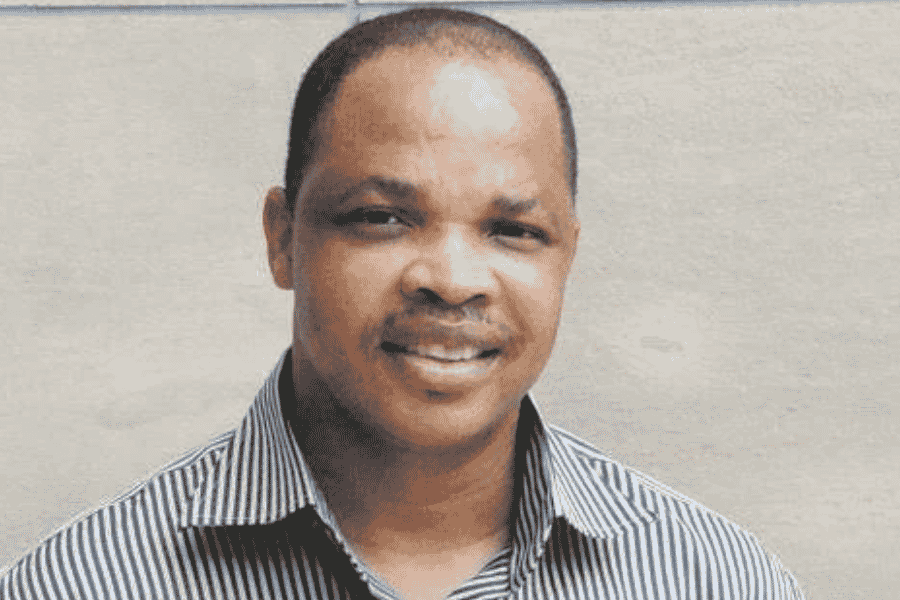
Owen Ndlovu was remembered at his memorial service on Wednesday, 23 September as a principled man, a pioneer in community broadcasting and a relentless advocate for artists.
Friends, colleagues, neighbours and industry figures gathered to honour Ndlovu, who was killed last week, as they reflected on a life marked by journalism, music, sport and a determination to fight for the rights of others.
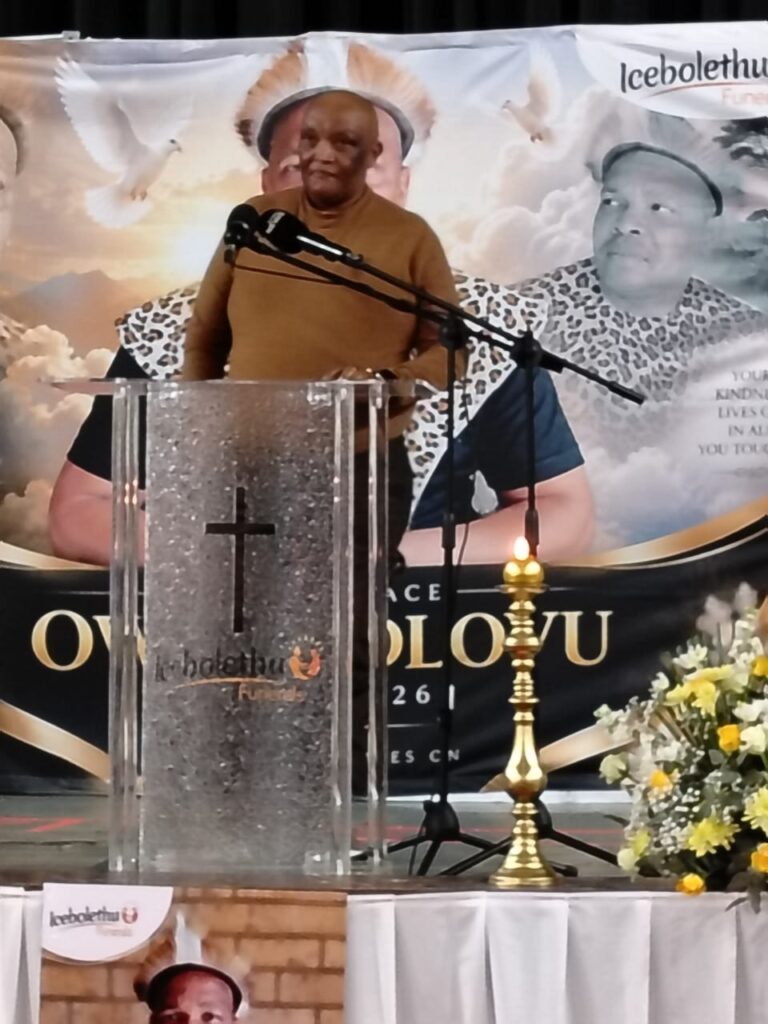
Master of ceremonies Tabiso Dema described Ndlovu as a highly principled man who stood his ground and never backed down.
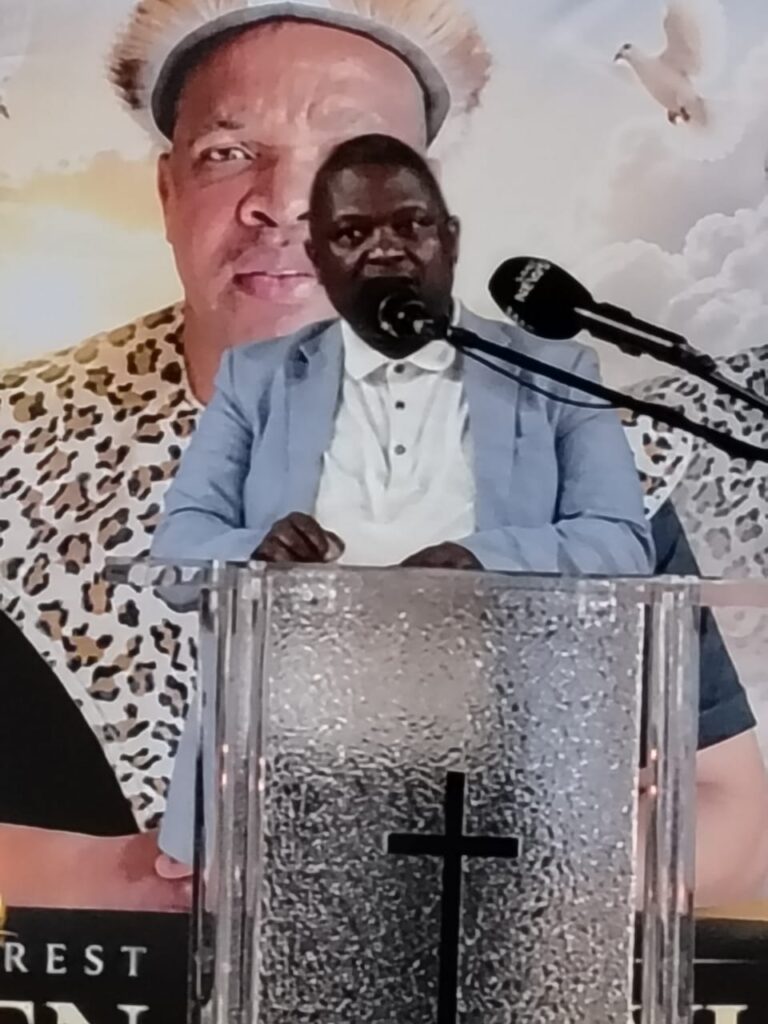
Chris Bongo, who worked with Ndlovu at the SABC, remembered him as a man who brought energy and humour wherever he went.
“I met Owen in 2002 at the SABC. The SABC is a big family that built us. Five years ago, I started my own venture and Owen joined our team. He was very funny and brought a lot of energy,” Bongo said.
Bongo said Ndlovu had spent years fighting for artists.
“He started fighting for artists in 2010. Every time we spoke, it was about the artists. He fought for what he believed in and he lived a full life,” he said.
Bongo urged Ndlovu’s family and friends not to allow his death to end the work he had started.
“Somebody decided to take his life away. Don’t let that break you, let it build you. Don’t stop the fight. Continue, because somebody died for you,” he said.
Ndlovu’s longtime friend and colleague Vusi Leeu said his death was something those close to him never imagined.
“This is the last thing we could have imagined. We never thought he would leave us like this,” Leeu said.
Leeu said he had known Ndlovu for more than 30 years, dating back to their time at Soweto community radio, now known as Jozi FM.
“He was a pioneer. He was among the first generation of community broadcasters in South Africa. He was also one of the few sports journalists in community radio,” Leeu said.
According to Leeu, Ndlovu’s work in community broadcasting helped demonstrate the importance of community radio to the broader broadcasting industry.
“It was people like Owen who inspired the SABC to look at community radio stations. He excelled in that space,” he said.
Leeu said Ndlovu’s passion for music eventually led them to start a company together.
“The industry has lost someone important. Through music and sport, he became a nation and community builder despite the challenges,” he said.
Leeu called for greater unity in the music industry and urged leaders to continue the work Ndlovu had championed.
“One of the things he leaves behind is a call for us and Eugene Mthethwa to come together. I will ask the leaders of the African Union to ensure that his dream does not die and that Artists United becomes an official union,” he said.
He also called on the government to ensure that those responsible for Ndlovu’s killing are found.
Ndlovu’s neighbour, Erick Mthombeni, remembered him as a man who made a difference in the lives of others.
“He did great things in the lives of people. We used to have so many break-ins that we had almost become used to them. We are now living in a man-made estate. Owen was a fighter,” Mthombeni said.
Dennis Madondo, a friend and former colleague at Jozi FM, remembered the early days of community broadcasting.
“We were among the first radio stations to receive a licence. When I joined Soweto Community Radio, we assembled a team,” Madondo said.
He said the station helped create opportunities for people beyond broadcasting.
“Whatever Jozi FM created, it created business people. We worked with passion. Owen raised his hand to do sport and, within a day, he had come up with a programme to cover sport,” Madondo said.
For Eugene Mthethwa, chairperson of Artists United, Ndlovu’s death was particularly painful because of the work they had shared.
Mthethwa recalled Ndlovu telling him that he was prepared to die for the cause he believed in.
“I remember Owen saying, ‘I am prepared to die.’ Little did we know that he meant it. But what was he prepared to die for? He was prepared to fight for the rights of artists,” Mthethwa said.
Mthethwa said Ndlovu had handed the chairmanship of Artists United to him and remained committed to its mandate of fighting for artists’ rights.
“He was not fighting only for his own rights. He gave his life to fighting for others. In this sector, we are sometimes too proud, but as musicians we must learn from Owen,” he said.
Mthethwa said Ndlovu had used his own resources to pursue cases that he believed were important to artists.
“He took SAMRO to court because we did not have the money to do it. Owen did it. When he was crying and saying, ‘They want to kill me,’ nobody was there,” Mthethwa said.
He also spoke about a bag recovered after Ndlovu’s death, saying it contained documents relating to SAMRO.
“He saved the bag and we have it. I checked it, and it contains documents from SAMRO,” Mthethwa said.
Mthethwa questioned the circumstances surrounding Ndlovu’s death and called for answers.
“Why was he killed two days before the court date?” he asked.
He said Ndlovu’s death would not end the work he had started.
“My tears will not fall for nothing. This will not end here. He has multiplied,” Mthethwa said.
Industry colleague Joy Mbewana described Ndlovu as someone who treated strangers like family.
“I knew him as a friend. To Owen, no one was a stranger. He did not simply build a network; he built families,” Mbewana said.
“He was a man willing to die for the truth. You can silence one voice, but you cannot silence the industry. Owen’s death must never be swept under the carpet,” she said.
His sister, Daphne Maswana said Ndlovu had been a source of emotional and financial support to her.
“I am disheartened to be standing here today. Owen was always there for me, financially and emotionally. I thought he would bury me and take care of my children,” Maswana said.
“He was like a father to us. He was very humble. He was a comforter and a free spirit,” she said.
For Ndlovu’s family, the loss was deeply personal.
His son, uThingo Ndlovu, spoke about the influence his father had on his life and the difficulty of accepting that he was gone.
“If it wasn’t for my father, I would have a criminal record. I keep asking myself: how did I miss this one? I was always with him,” he said.
“It is going to be very hard, but we need to do it for him,” uThingo said.
Across the tributes, one message remained constant, Ndlovu was remembered not only for the work he did, but for the people he fought alongside and the causes he refused to abandon.
His friends and colleagues now say the responsibility is theirs to continue that work.
For a man who spent years demanding accountability and fighting for artists, his final legacy may be the same challenge he posed throughout his life, that those left behind must continue the fight.