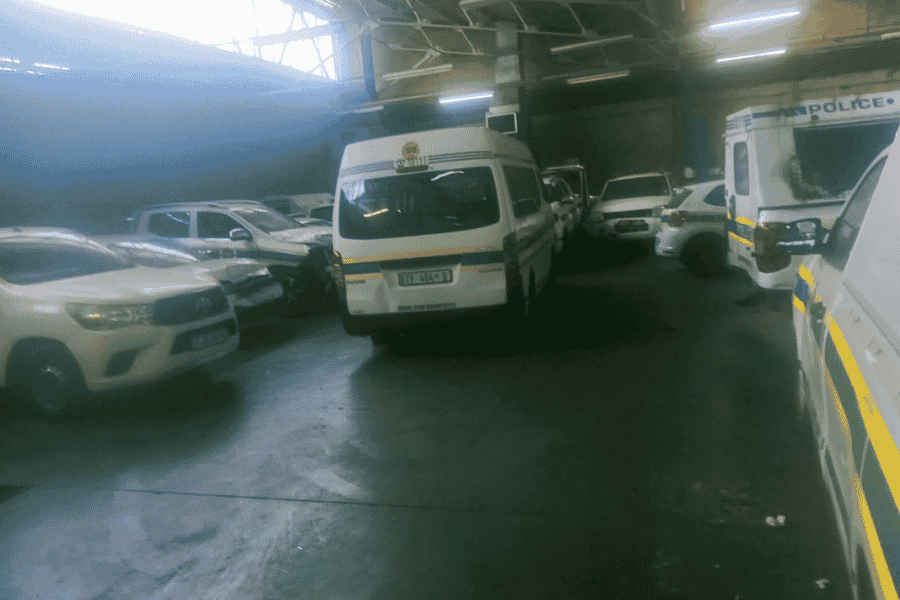
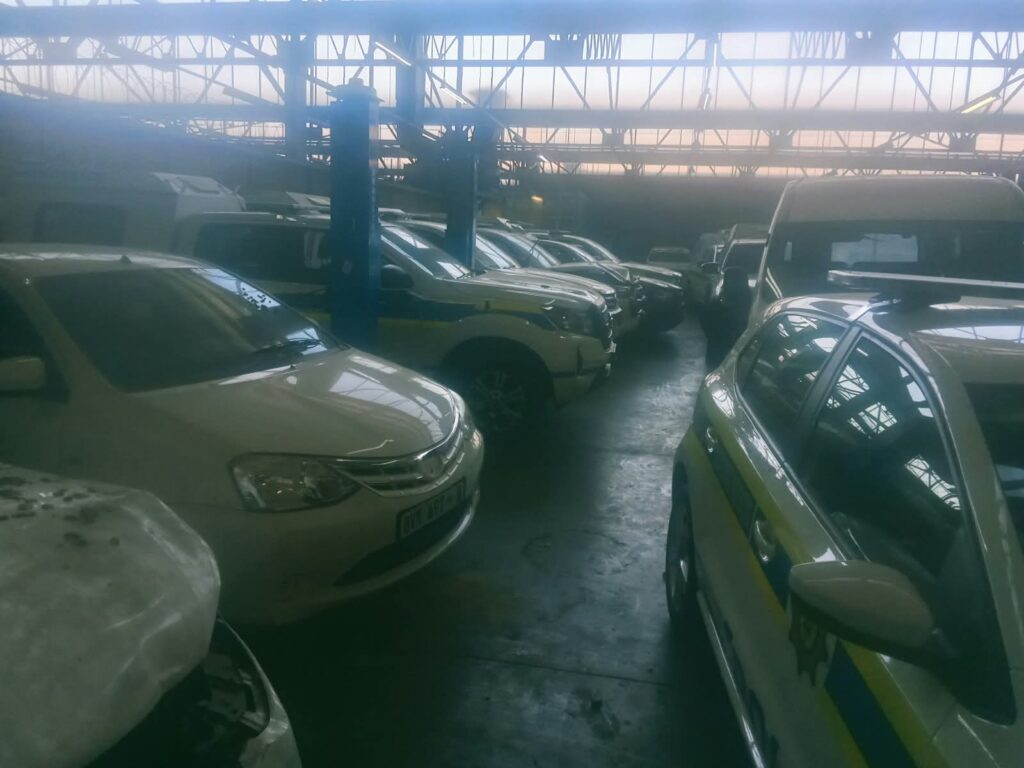
More than 100,000 government vehicles – including police vans, ambulances and correctional services vehicles – are stuck in workshops across the country without being fixed or repaired, some since April.
This as a multi-billion-rand state contract awarded to a private entity to oversee the maintenance and repair of these vehicles descends into chaos, leaving black-owned small businesses on the brink of collapse.
The crisis is centred on the RT46 contract, one of the biggest in government, administered by the Department of Transport for the repair and maintenance of the entire government fleet.
The contract was previously run by WesBank and was taken over by Afrirent Automotive Solutions after the company was appointed in December last year and given six months to prepare.
Afrirent officially took over on 1 July 2026.
But according to the Motor Industry Federation of Associations (MIFA), which represents Historically Disadvantaged Individuals (HDI) and black-owned workshops, the transition has been disastrous.
MIFA Chairperson James Ngubeni has accused Afrirent of non-compliance and of taking over a contract it was not ready to run.
“This is one of the biggest contracts in government that amounts to about R43 billion in five years,” Ngubeni told Africa Daily.
“What government does is they give a contract to an entity to administer the repairs and maintenance of all government vehicles. The contract is centralised under the Department of Transport. All government vehicles fall under this contract. So Afrirent then appoints service providers which are SMMEs to maintenance and repair of these vehicles.”
He said MIFA was formed to collectively represent previously disadvantaged workshops dependent on RT46 work.
“The new service provider Afrirent was appointed in December last year and was given six months to get its house in order. They even appeared before SCOPA. However, the red flags for us were when they started in July and could not provide the merchant codes in June and failed to allocate jobs to the SMMEs, at the same time saying they would pay us after 30 days, which still has not happened.
“They were just not ready to take on the contract. On a daily basis, they came up with excuses… and as a result, we have most of the workshops that have closed, which creates unemployment,” he said.
Ngubeni said the problem started before Afrirent took over.
WesBank reportedly stopped processing vehicles in April 2026, creating a backlog of around 20,000 vehicles between April and June that was handed over to Afrirent. That backlog, he says, has now ballooned.
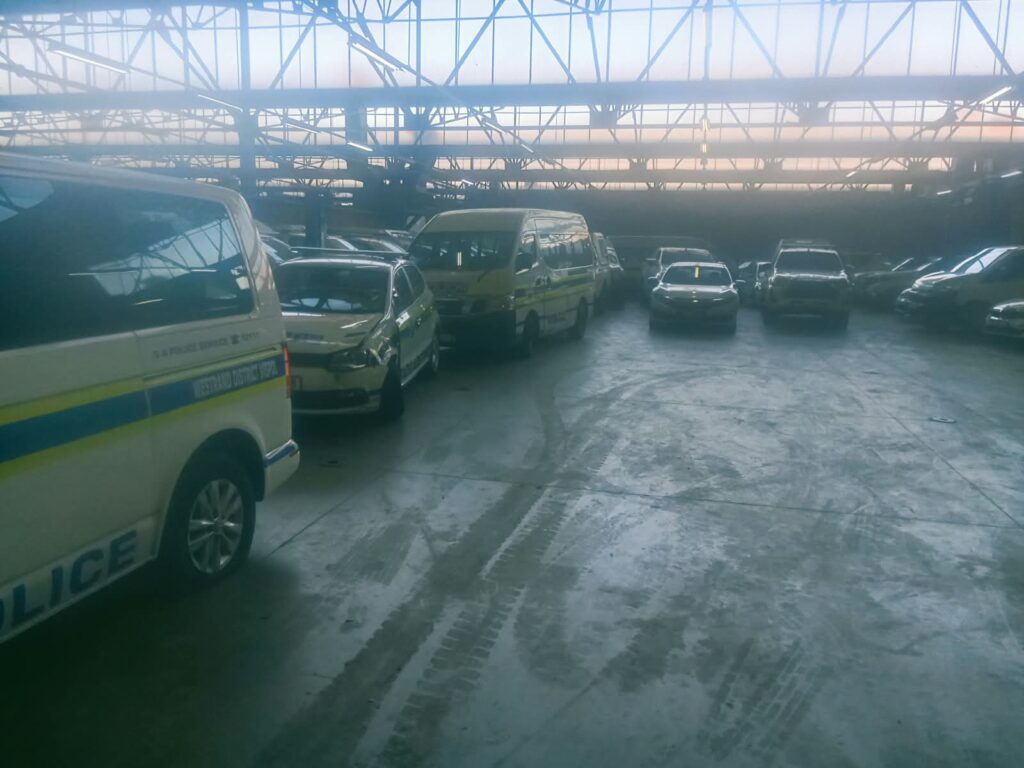
“As we speak, we have vehicles that have been not be fixed since April, which means police and medics are working with less police cars or ambulances. Ambulances are not in hospitals because they are sitting in workshops waiting to be serviced. This is a national crisis.”
The fallout for workshops has been devastating. Under RT46, the new system was meant to introduce self-allocation of work to reduce human intervention and ensure equitable distribution among HDI workshops. MIFA says that system has never worked.
However, in a statement after Africa Daily sent questions, Afrirent refuted the allegations and confirmed that its contractual relationship for RT46-2026 is with the National Department of Transport and National Treasury.
“All reporting obligations on implementation, merchant allocation, expenditure and performance are discharged through those structures.
“Since commencement, our priority has been stabilising the transition, restoring vehicle availability and managing outstanding and new requirements from participating entities. We are working directly with those entities and government structures to address operational matters and improve vehicle uptime.
“We remain fully committed to the participation and development of HDI and black-owned merchants. Our onboarding process has been open since 1 April 2026 and extended to 31 December 2026 to give qualifying merchants nationally a fair opportunity to participate. This approach is intended to broaden participation, not restrict it to a selected group or those represented by particular associations,” the company said.
The statement further said Afrirent would not support attempts by external organisations to use commercial, public or paid pressure to influence allocation of government work.
“Allocation remains governed by contractual requirements including capability, location, capacity, transformation, compliance and equitable distribution.
“While we respect the role of industry bodies to represent members, this does not entitle them to allocations, confidential information or participation in contractual decision-making. We will continue to account to mandated structures through prescribed channels,” Afrirent said.
Treasury reportedly said it was premature to fault Afrirent’s performance, noting the company has only had a few months to stabilise operations.
Workshop owners who spoke to Africa Daily paint a picture of an industry collapsing.
Philly Ntoagae, director of Lux Auto Repairs, said he has not received a single job since Afrirent took over despite being fully compliant.
“I have a merchant number and my workshop has been inspected but I haven’t received a single job from Afrirent. It’s month-end, I have to pay my employees and rent. Afrirent can’t give us jobs because their system is not working. They don’t have a clue how this tender works,” he said.
“I’m considering reducing my staff, people I took years training. In a few weeks, they are going to add to the unemployment list. I just don’t have the money to pay them, and eventually, if things don’t change I will close down. I was on the RT46 contract since 2010 and it was run professionally until now.”
Another workshop owner, Prudence Phakathi of Khulawaziwe Pty Ltd, said the payment system has crippled small businesses.
“Invoices not paid on time affect the execution of work, then work becomes stagnant. When vehicles are kept at the workshop for longer periods cash flow is not coming in. New work cannot be allocated as the vehicles kept at the workshop show on the system as merchant has work,” she said.