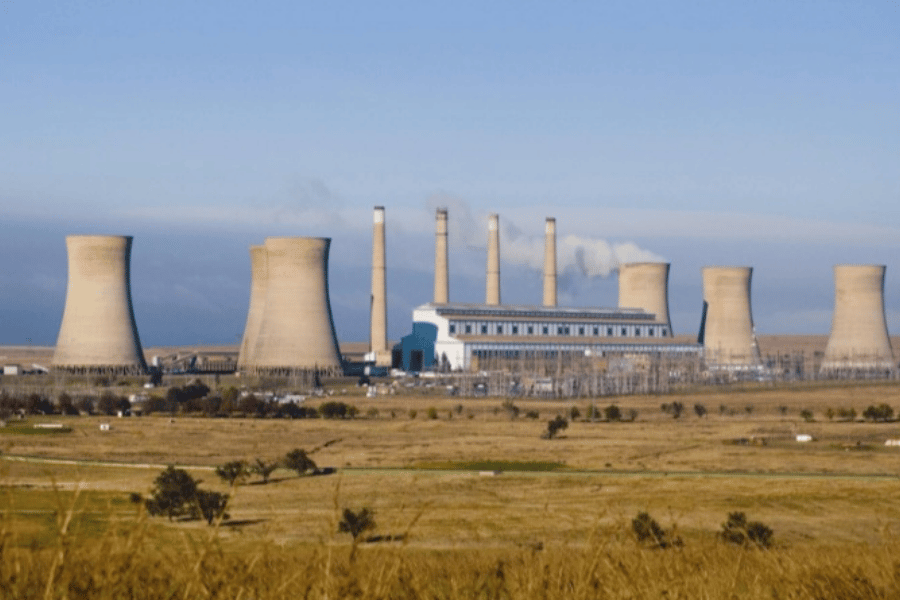
Eskom’s R30.3 billion profit has been overshadowed by a startling disclosure at its annual results presentation: roughly R45 billion in potential revenue was not captured, comprising an estimated R29 billion linked to electricity theft and R15.8 billion in municipal revenue that Eskom could not recognise because it had not been collected.
While Eskom celebrated its second consecutive year of profitability on Monday, the utility revealed that roughly R45 billion in potential revenue never made it into its income statement during the financial year ended March 2026.
The figure is made up of two very different problems, about R29 billion in estimated revenue associated with electricity theft and another R15.8 billion in electricity revenue invoiced to municipalities but not recognised because the money had not been collected.
The revelations emerged as Eskom reported that its net profit after tax more than doubled from a restated R14 billion in the previous financial year to R30.3 billion.
Its audited financial statements were approved by the board on 30 August and published on Monday, 31 August 2026.
The question now is how much stronger Eskom’s financial position could have been if it had been able to capture even a portion of the revenue slipping through its fingers.
According to Eskom’s financial disclosures, non-technical energy losses which include illegal connections, meter tampering, bypassing meters and the purchase of electricity tokens from illegal vendors amounted to 13,120 GWh, or 7.02% of total energy, during the year.
Eskom’s audited accounts put the estimated cost of these non-technical energy losses at R6.599 billion.
But at Monday’s results presentation, outgoing group chief financial officer Calib Cassim put the potential revenue value of the electricity stolen at approximately R29 billion, using an average selling price of about R2.20 per kilowatt-hour.
In other words, electricity was generated, transmitted and consumed but Eskom did not bill for it.
Eskom’s own accounts show just how little it recovered from this problem. The utility invoiced only R11.8 million in revenue relating to non-technical energy losses during the year and received just R4.8 million of that amount.
It also received R50.2 million in meter-tampering fees. The scale of the problem is therefore far greater than the money being recovered.
And the audited accounts warn that the risk remains. Eskom says investigations into the illegal generation of prepaid electricity tokens on its online vending system in 2024 mean the risk of future non-technical energy losses remains, despite improvements to the vending environment.
The second hole is municipal debt. Eskom says R15.8 billion that it invoiced during the year could not be recognised as revenue because the money had not been collected.
The accounting treatment means revenue from defaulting municipalities is recognised only when cash is actually received.
This is becoming an increasingly dangerous problem. Municipal arrear debt reached R111.6 billion at the end of March 2026 an increase of R17 billion in one year.
Eskom says the figure had climbed further to R119.9 billion by June 2026. And the utility’s warning is stark, if the problem is not addressed, municipal debt could reach R358 billion by 2031.
That would effectively wipe out the benefit of the government’s R230 billion Eskom debt-relief programme, according to Cassim.
Eskom’s R30.3 billion profit is undoubtedly a dramatic turnaround.
The utility made only four days of rolling blackouts during the financial year, compared with 329 days in 2024.
Revenue increased 4.1%, while EBITDA rose to R108.6 billion.
But electricity sales volumes actually fell 6.2%.
The improved financial result was helped substantially by a 12.7% average electricity tariff increase, alongside lower primary-energy costs and improved operational performance.
So the profit cannot simply be read as Eskom suddenly selling dramatically more electricity.
Instead, the utility is making more money from a combination of higher tariffs, improved operational performance and lower costs while simultaneously struggling to collect billions from municipalities and prevent billions of rand worth of electricity from being stolen.
Cassim made it clear that Eskom cannot solve the municipal debt crisis by itself.
He said that if the
utility could secure and improve collection of about 50% of the lost potential revenue, it could create a starting point of around R20 billion a year in additional revenue.
But he said Eskom needs government and law enforcement to make that happen. That puts enormous pressure on municipalities particularly those already struggling to pay their Eskom accounts.
It also raises a broader question about South Africa’s electricity model, how sustainable is Eskom’s recovery if the utility continues generating electricity that is stolen or sold to customers who do not pay?
Eskom says it had 710 active forensic cases at the end of March. There had been 505 arrests, 13 convictions, 15 employees dismissed following forensic referrals, 101 suppliers restricted and 299 criminal matters reported to police.
The utility’s CEO Dan Marokane acknowledged, however, that arrests do not necessarily translate into accountability.
The company has also reinstated probity checks and proactive assurance on high-value tenders after they were discontinued in October 2022.
Marokane said the absence of those controls had created vulnerabilities in Eskom’s internal controls.
Eskom’s turnaround is real but so is the money it is failing to capture. The utility made R30.3 billion in profit.
At the same time, approximately R29 billion in potential electricity revenue was lost to theft, while another R15.8 billion in invoiced municipal revenue was not recognised because it had not been collected.
Together, those figures amount to roughly R45 billion, about R15 billion more than Eskom’s entire annual profit.