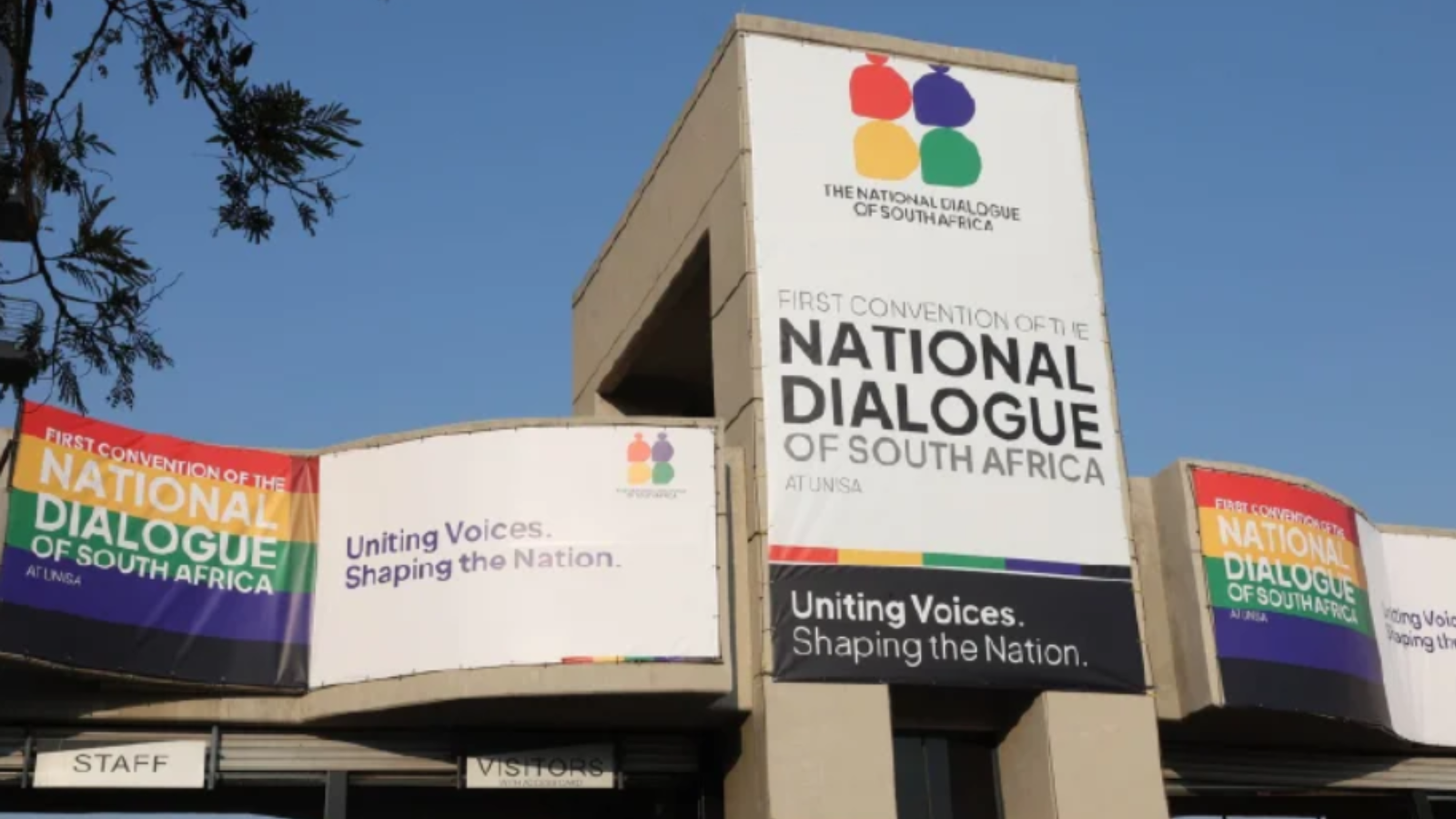
South Africa’s long-awaited National Dialogue is finally moving from policy discussions and planning rooms into communities, wards and public spaces across the country.
On May 11, 2026, the National Dialogue steering committee formally adopted the National Dialogue Pilot Dialogue Implementation Framework — a key operational blueprint that will guide the rollout of 195 pilot dialogues across all nine provinces between June and August this year.
The development marks a major shift from conceptual planning to implementation, as government and civil society structures attempt to build what organisers describe as a genuinely citizen-led national conversation capable of shaping South Africa’s future.
However, the process will temporarily pause later this year after President Cyril Ramaphosa announced that local government elections will take place on November 4, 2026.
To prevent the initiative from becoming consumed by election campaigning and partisan tensions, the steering committee resolved that the National Dialogue would enter a “pause and reflection period” between September and December 2026.
The implementation framework is the second major milestone in the National Dialogue rollout process. The first came in March 2026, when the steering committee adopted a broader strategic roadmap outlining the overall direction and objectives of the initiative.
This latest framework converts that strategy into a practical operational programme with province-by-province implementation plans.
“The National Dialogue must not merely speak about communities but must create meaningful platforms through which communities are able to speak for themselves,” the steering committee said.
Of the 195 pilot dialogues planned across 39 sectors, roughly 60% will focus directly on ward-level and community-based participation.
Organisers say this is intended to ensure the process does not become confined to political elites, conference venues or institutional spaces. Instead, the dialogues will include ward-based meetings, digital engagements, media-driven conversations and sector-specific forums designed to reflect the country’s geographic, social and economic diversity.
The steering committee has placed strong emphasis on inclusion and accessibility.
The framework prioritises multilingual facilitation, trauma-informed engagement methods and balanced participation across provinces, districts, townships, rural communities and urban centres.
The inclusion of trauma-informed methodologies reflects an acknowledgement that many South Africans continue to carry the social and psychological burdens of exclusion, inequality and historical marginalisation into public participation processes.
One of the framework’s core priorities is described as “building trust through direct engagement in communities often excluded from national processes”, highlighting concerns over deep public scepticism toward political and institutional initiatives.
The pilot phase is being positioned not as a final model, but as a national testing process through which organisers can refine methodologies, strengthen coordination systems and evaluate different engagement approaches before a broader rollout.
The steering committee has openly described the framework as a “working operational guide” that will evolve through implementation experience, institutional refinement and sectoral coordination.
Preparations for the June launch are already underway.
Sector pilot plans are being finalised, facilitation guidelines developed, communication systems strengthened and monitoring and evaluation structures expanded.
At the same time, organisers have acknowledged the need for additional partnerships and financial support to sustain the scale and ambition of the programme.
The timeline remains tight.
The three-month pilot phase — spanning June, July and August — will require organisers to coordinate 195 dialogues across nine provinces while simultaneously testing systems, refining methodologies and integrating grassroots initiatives already underway.
The steering committee says the process is attempting to balance urgency with responsibility.
The National Dialogue unfolds at a symbolic moment in South Africa’s democratic history.
The country is commemorating 30 years of constitutional democracy in 2026 under the theme “One Constitution; One Nation: Reflect, Renew, Recommit”.
Yet the process is taking place against the backdrop of persistent unemployment, deep inequality, fragile public trust in institutions and growing social frustration.
Organisers say the ultimate objective is to develop a credible, inclusive and non-partisan people’s compact that can help shape South Africa’s future social and economic trajectory.
The steering committee has called on communities, civil society organisations, organised labour, business formations, youth movements, academic institutions, faith-based organisations and broader social partners to actively participate in what it describes as a “solutions-oriented and citizen-led” national conversation.