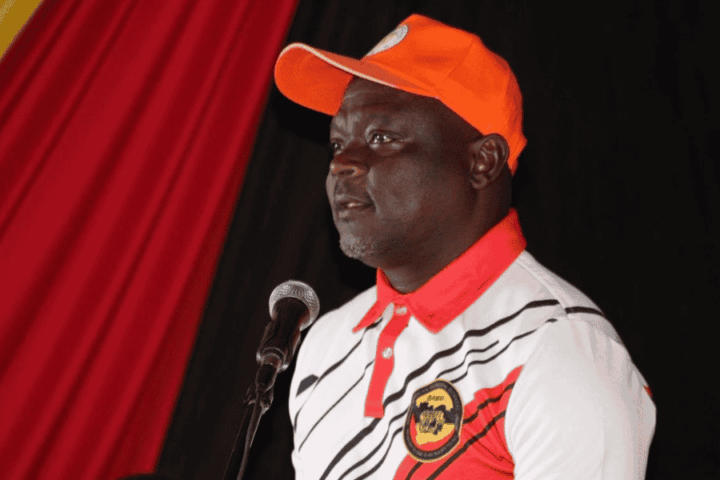
The ongoing internal squabble at the uMkhonto weSizwe Party (MKP) has claimed yet another scalp in the form of its longest-serving spokesperson, Nhlamulo Ndhlela.
Ndhlela was dismissed from his position with immediate effect after a media statement he delivered last week was declared unconstitutional by the party’s national leadership.
Secretary General Sibonelo Nomvalo announced on Monday, confirming Ndhlela’s removal from both his party and parliamentary spokesperson roles and naming academic and former news editor Sfiso Mahlangu as his replacement.
The controversy centres on a statement Ndhlela read at a media briefing on Saturday, 16 May 2026, attended by former president Jacob Zuma and senior MKP officials. In it, he announced the formal establishment of the MK Party Institute, a new ideological and strategic body, and declared that it would assume sweeping authority over the entire party machinery.
“The Institute will assume full responsibility for the management and administration of the organisation. All discussions, engagement, and official communication with President Zuma shall henceforth be conducted through the members of the Institute,” Ndhlela said.
He said the institute would be politically led by party deputy president Dr Mandlakayise Hlophe and would include senior party figures such as General Manana, Oupa Mathebula, Dr Khanyisile Litchfield-Tshabalala, Lindelani Mbambo and Ndhlela himself.
Ndhlela went further, announcing a reconfiguration of existing national leadership structures and stating that all officials, including the secretary general, would now report to the institute rather than operate independently. “All organisational structures will now report directly to the Institute and will assume responsibility for the review, alignment, and strengthening of all organisational prescripts, governance frameworks, constitutional provisions, and leadership structures of the MK Party in line with the strategic reorganisation agenda of the movement,” he said.
The statement also dramatically curtailed the office of the secretary general, reducing it to an administrative function. “The office of the Secretary General is going to be focusing solely and mainly on structures and organisation in preparation for the local government elections,” it read.
While parts of the statement dealt with the party’s broader liberation philosophy, it was this specific cluster of pronouncements that triggered the national leadership’s furious response.
Nomvalo’s reply was unequivocal. In his statement released on Monday, the secretary general acknowledged that the 16 May briefing had taken place in Zuma’s presence but made clear that neither the former president nor national officials had been fully briefed on the contentious sections before Ndhlela read them publicly.
“The President and national officials were not fully aware of the entirety of the statement until the statement was made public, and in particular, the propositions dealing with the party’s leadership architecture,” Nomvalo said.
The Secretary General declared the relevant portions of the statement without legal or constitutional force. “The national officials hereby declare the proposition of changing the party’s leadership structure by the MKP Institute issued on the 16th of May 2026 null and void. The media statement does not reflect the views and decisions of the national leadership of uMkhonto weSizwe Party,” he said.
Nomvalo added that members of the institute had since accepted the national leadership’s guidance that the statement “was necessarily beyond the powers of the NTT [National Task Team] and was unconstitutional.”
Rather than disbanding the institute outright, the national leadership announced it would be reintegrated into existing party structures. “The national leadership of uMkhonto weSizwe Party has decided to integrate the institute into the broader organisational policy-making machinery reporting to the Secretary General,” Nomvalo said.
Ndhlela, who had served as the party’s first public face since its meteoric rise in the 2024 elections, was not mentioned by name in Nomvalo’s statement. The secretary general thanked him obliquely as “the Comrade who held the fort as the inaugural national spokesperson of the party” and said his “contribution is appreciated”, language that did little to soften what amounted to a politically embarrassing exit.
Mahlangu, described by Nomvalo as “a highly experienced journalist and renowned media personality” who “brings invaluable technical and professional insight to the party”, steps into the role at a turbulent moment for the MKP as it prepares for local government elections and a planned policy conference in June 2026.